The private label supplements market presents an extraordinary opportunity—and an equally extraordinary minefield. Every day, new brands enter the space with ambitious visions, yet most stumble before they even reach the shelf. The difference between those who thrive and those who fail rarely comes down to marketing budgets or packaging aesthetics. Instead, it hinges on something far more fundamental: their ingredient sourcing strategy.
At NutraAeon, we’ve witnessed this pattern repeatedly. Successful brands understand that exceptional products begin with exceptional ingredients, sourced through meticulous, transparent processes. Our philosophy of Quality, Transparency, and Empowerment isn’t just a tagline—it’s the framework that separates market leaders from failed launches. When you source ingredients with these principles as your foundation, you’re not just buying raw materials. You’re building consumer trust, regulatory compliance, and long-term brand resilience into every capsule and tablet.
Understanding the Regulatory Foundation
Before you source a single ingredient, you need to understand the regulatory landscape that governs private label supplements. The FDA’s dietary supplement Current Good Manufacturing Practice (DS CGMP) regulations aren’t optional guidelines—they’re legal requirements that define how your products must be manufactured, tested, and documented.
These regulations impact every aspect of your sourcing decisions. When you choose an ingredient supplier, you’re not just evaluating their product quality. You’re assessing whether their quality systems, documentation practices, and manufacturing controls align with DS CGMP requirements. Suppliers who understand these regulations will provide the batch-specific certificates, testing protocols, and traceability documentation that your manufacturing partner needs to maintain compliance.
Understanding DS CGMP early prevents costly mistakes. We’ve seen brands invest thousands in ingredient orders, only to discover their supplier’s documentation doesn’t meet their manufacturer’s requirements. Their launch gets delayed by months while they scramble to find compliant alternatives. When you understand regulatory requirements from day one, you make sourcing decisions that accelerate your timeline rather than derailing it.

Step 1: Define Clear Product Specifications
Vague ingredient requirements create vague products. Market leaders begin with crystal-clear specifications that define exactly what they need. This precision starts with five critical factors that determine ingredient quality and performance.
First, establish purity standards. How much of your ingredient must be the active compound versus fillers or processing aids? For amino acids like L-Theanine, purity levels can range from 95% to 99%+. This percentage directly impacts efficacy and cost per effective dose. Second, define potency requirements. If you’re formulating a vitamin C product, will you use ascorbic acid at 100% potency, or a mineral ascorbate with lower vitamin C content but better tolerability?
Third, consider bioavailability. The most potent ingredient means nothing if the body can’t absorb it. This is why NutraAeon offers multiple forms of key nutrients—like Vitamin E tocopherols in different configurations—allowing formulators to choose the form that best matches their bioavailability goals.
Fourth, sustainable sourcing matters more than ever to conscious consumers. Define whether you need organic certification, non-GMO verification, or specific geographic sourcing. Finally, require transparent supply chain data. You should know not just what you’re buying, but where it originated, how it was processed, and what testing it underwent—considerations detailed in our comprehensive guide to choosing reliable supplement ingredient suppliers.
When you define these specifications upfront, you create an objective standard against which to evaluate every potential supplier. This clarity accelerates the qualification process and ensures you’re comparing equivalent offerings.
Step 2: Qualify and Vet Your Suppliers
Supplier selection is where many private label supplement launches begin to falter. A supplier’s website might promise premium quality and reliable delivery, but only a rigorous vetting process reveals the truth. Market leaders implement a multi-tier qualification system that goes far beyond price comparisons.
Start by verifying certifications. Look for ISO 9001 quality management certification as a baseline, then layer on industry-specific credentials like NSF GMP registration or third-party testing certifications. These aren’t just badges to display—they represent audited, verified quality systems that reduce your risk.
Next, conduct facility audits when possible. If you’re partnering with a manufacturer who sources ingredients, verify they audit their suppliers’ facilities. Ask specific questions: How do they test incoming raw materials? What contamination controls exist in their facilities? How do they handle deviations from specifications? The answers reveal whether a supplier has robust quality assurance systems or just quality assurance language.
FSMA (Food Safety Modernization Act) compliance adds another layer of supplier vetting. Your ingredient suppliers should have documented food safety plans that identify potential hazards and establish preventive controls. When suppliers take food safety seriously, they’re protecting your brand from contamination events that could destroy consumer trust overnight.
At NutraAeon, we maintain direct partnerships with certified herbal farms, validated raw material suppliers, and trusted global growers. This direct sourcing model ensures that every ingredient in our comprehensive product portfolio—from amino acid series to vitamin and mineral offerings—comes from suppliers we’ve personally qualified through rigorous standards.
Step 3: Verify Through Certificates of Analysis
A Certificate of Analysis (COA) is your ingredient’s resume—and like any resume, it can be misleading if you don’t know how to read it. Market leaders don’t just collect COAs; they scrutinize them with technical expertise that separates genuine quality from clever marketing.
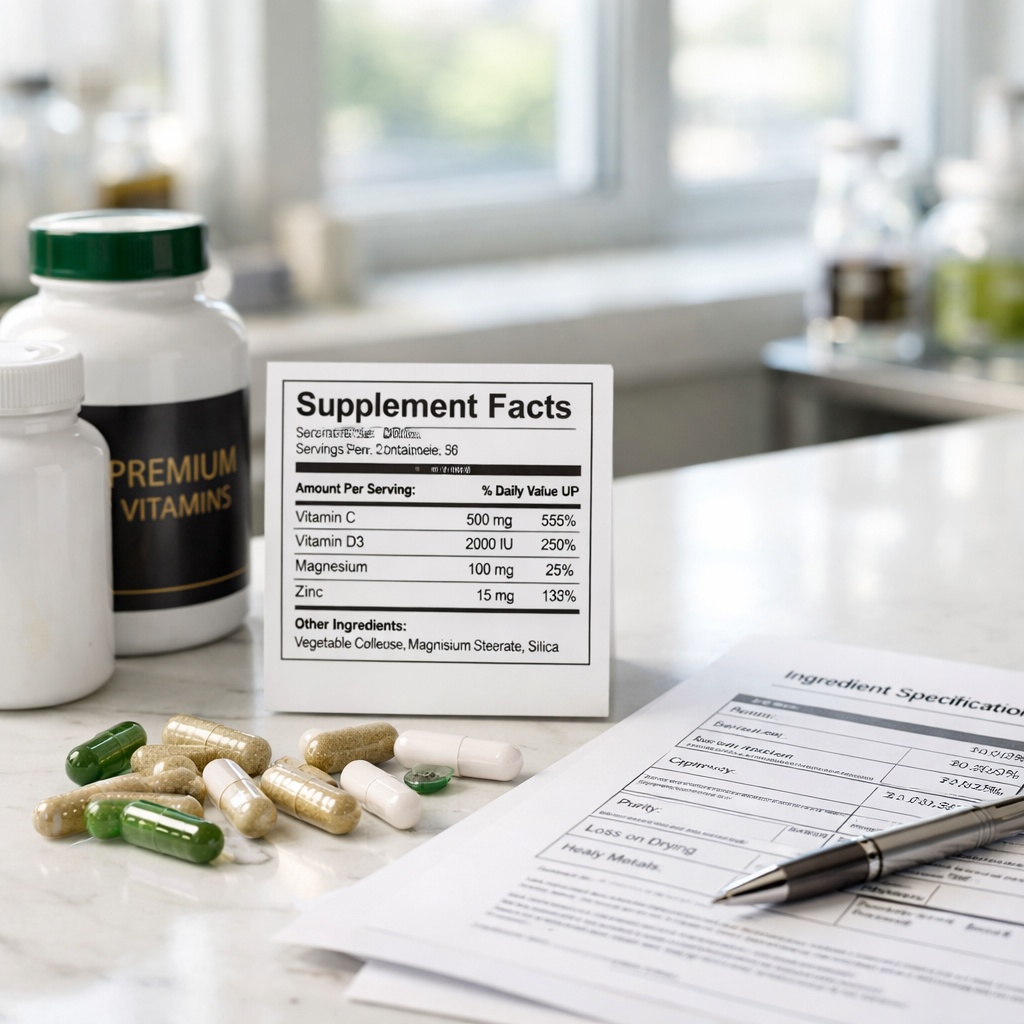
Every ingredient batch should have its own specific COA, not a generic specification sheet. That COA should confirm identity through appropriate methods like HPLC (High-Performance Liquid Chromatography) or FTIR (Fourier Transform Infrared Spectroscopy), verify potency through quantitative testing, and screen for contaminants including heavy metals, microbiological hazards, and pesticide residues.
But here’s what separates careful buyers from careless ones: verifying the test methods themselves. Not all testing is equal. A supplier might claim their Vitamin C has 99% purity, but if they used an inadequate test method, that number is meaningless. Ask what testing methodology was used and whether it’s validated. Ask whether testing was conducted by the supplier’s internal lab or an independent third party. Third-party testing eliminates the conflict of interest inherent in self-testing.
Compare COA results against your pre-defined product specifications. If you specified 98% minimum purity for L-Tryptophan and the COA shows 97.5%, that’s a red flag—not because the ingredient is necessarily problematic, but because the supplier didn’t meet your agreed-upon specifications. Consistency in meeting specs indicates reliability in their quality systems, as we detail in our guide on leveraging certificates of analysis as your first line of defense.

Step 4: Implement Quality Systems and Manufacturing Controls
DS CGMP compliance doesn’t end at ingredient selection—it extends through every manufacturing step. When you work with contract manufacturers for your private label supplements, verify they implement the quality systems and production controls that guarantee consistent product quality.
Production controls should ensure that ingredients are used in the correct amounts and sequences, mixed thoroughly to guarantee uniformity, and manufactured under conditions that prevent contamination. Ask potential manufacturing partners how they validate their mixing processes. How do they confirm that every tablet or capsule contains the same amount of active ingredient? The answer should involve detailed sampling plans and testing protocols, not vague assurances.
Labeling accuracy is another critical control point. Your product labels must accurately reflect what’s in the bottle, and manufacturers must have systems to prevent label mix-ups. We’ve seen recalls triggered by simple labeling errors that put products in wrong bottles. These mistakes damage brands far beyond the financial cost of the recall.
Documentation practices form the backbone of quality systems. Every step in manufacturing should generate records that prove compliance—batch records, testing results, equipment cleaning logs, and deviation reports. When a quality system relies on documentation, it creates accountability that prevents shortcuts and catches problems before they reach consumers. Our quality control resources provide detailed protocols for implementing these systems effectively.
Step 5: Establish Traceability and Documentation
Imagine a consumer experiences an adverse reaction to your supplement. Regulators investigate and ask you to trace every ingredient in that specific bottle back to its source. Can you do it? Market leaders can answer with confidence because they’ve built comprehensive traceability into their supply chains.
Traceability starts with lot coding that links finished products to the specific ingredient batches used in manufacturing. Each ingredient batch should trace back further to the supplier, the supplier’s lot numbers, and ideally to the geographic origin of raw materials. This documentation chain allows you to pinpoint problems precisely if issues arise.
Complete traceability offers strategic advantages beyond regulatory compliance. When a particular batch of ingredients performs exceptionally well, traceability lets you identify exactly what made it superior—perhaps a specific harvest season or processing method. You can then replicate that success intentionally rather than hoping for luck.
Documentation also protects your brand during disputes. If a supplier claims they delivered premium-grade ingredients but testing shows otherwise, your documentation trail proves what actually happened. This evidence-based approach prevents he-said-she-said arguments that waste time and money.
Step 6: Navigate Private Label Execution Considerations
Understanding ingredient quality is essential, but successful private label supplement launches also require mastering practical execution factors that many entrepreneurs underestimate. Your sourcing blueprint must account for manufacturer selection, minimum order quantities, lead times, and packaging customization—each presenting potential obstacles or opportunities.
Manufacturer selection involves finding partners who align with your quality standards and business model. Small startups need manufacturers willing to work with smaller batches and provide guidance, while established brands need scalable production capabilities. Ask potential partners about their minimum order quantities (MOQs) upfront. If a manufacturer requires 10,000-unit MOQs and you’re testing the market with 1,000 units, you’re mismatched from the start.
Lead times deserve careful attention, especially when sourcing specialized ingredients. At NutraAeon, we maintain inventory of our core amino acid, vitamin, and mineral series specifically to reduce lead time variability for our partners. But customized formulations or unusual ingredients often require longer procurement windows. Build realistic timelines that account for ingredient sourcing, manufacturing, testing, and shipping—then add buffer time for the inevitable unexpected delays.
Packaging customization is where your brand comes to life, but it’s also where costs can spiral. Stock bottles are economical but generic. Custom bottles create distinction but require higher MOQs and upfront tooling costs. Market leaders often start with stock packaging and premium labels, then transition to custom packaging as volumes grow.
Finally, storytelling differentiates your products in crowded markets. Consumers don’t just buy supplements—they buy stories about quality, sourcing, and values. When you source ethically from transparent supply chains, you earn compelling stories to tell. NutraAeon’s direct partnerships with certified farms and validated suppliers aren’t just operational advantages—they’re narrative assets that help our partners build authentic brand stories.
Step 7: Build Supply Chain Resilience and Risk Management
The most successful private label supplement brands we work with share a common trait: they think like risk managers. They understand that supply chain disruptions—ingredient shortages, quality failures, regulatory changes, or geopolitical events—can derail even the best-planned launch. Building resilience into your sourcing strategy protects against these inevitable challenges.
Diversifying ingredient sources is your first line of defense. Relying on a single supplier for critical ingredients creates catastrophic risk. If that supplier experiences production problems or quality issues, your entire product line stops. Market leaders qualify backup suppliers before they’re needed, maintaining relationships that can activate quickly if primary sources fail.
Building contingency plans means thinking through “what if” scenarios before they happen. What if your primary Vitamin C supplier can’t deliver next quarter? What if new testing requirements delay ingredient releases? What if contamination issues force a supplier shutdown? For each risk, define your response plan. This preparation transforms potential crises into manageable challenges—strategies explored further in our analysis of current nutritional ingredients market dynamics.
Inventory strategy plays a crucial role in resilience. Holding zero inventory minimizes capital investment but maximizes vulnerability to disruptions. Holding excessive inventory ties up cash and risks expiration. Market leaders find the balance point that provides adequate buffer without excessive cost, adjusting based on ingredient stability, supplier reliability, and market demand patterns.
Communication systems ensure you detect problems early. Establish regular touchpoints with your ingredient suppliers and manufacturing partners. When suppliers communicate proactively about potential delays or quality concerns, you have time to respond strategically. When they hide problems until the last minute, you’re forced into reactive crisis management.
Ensuring Marketplace Readiness Through Compliance and Claims
Your private label supplements can’t succeed if regulators or platforms reject them, making marketplace readiness a critical final consideration in your sourcing blueprint. This readiness encompasses labeling accuracy, defensible claims, and platform-specific requirements that vary across distribution channels.
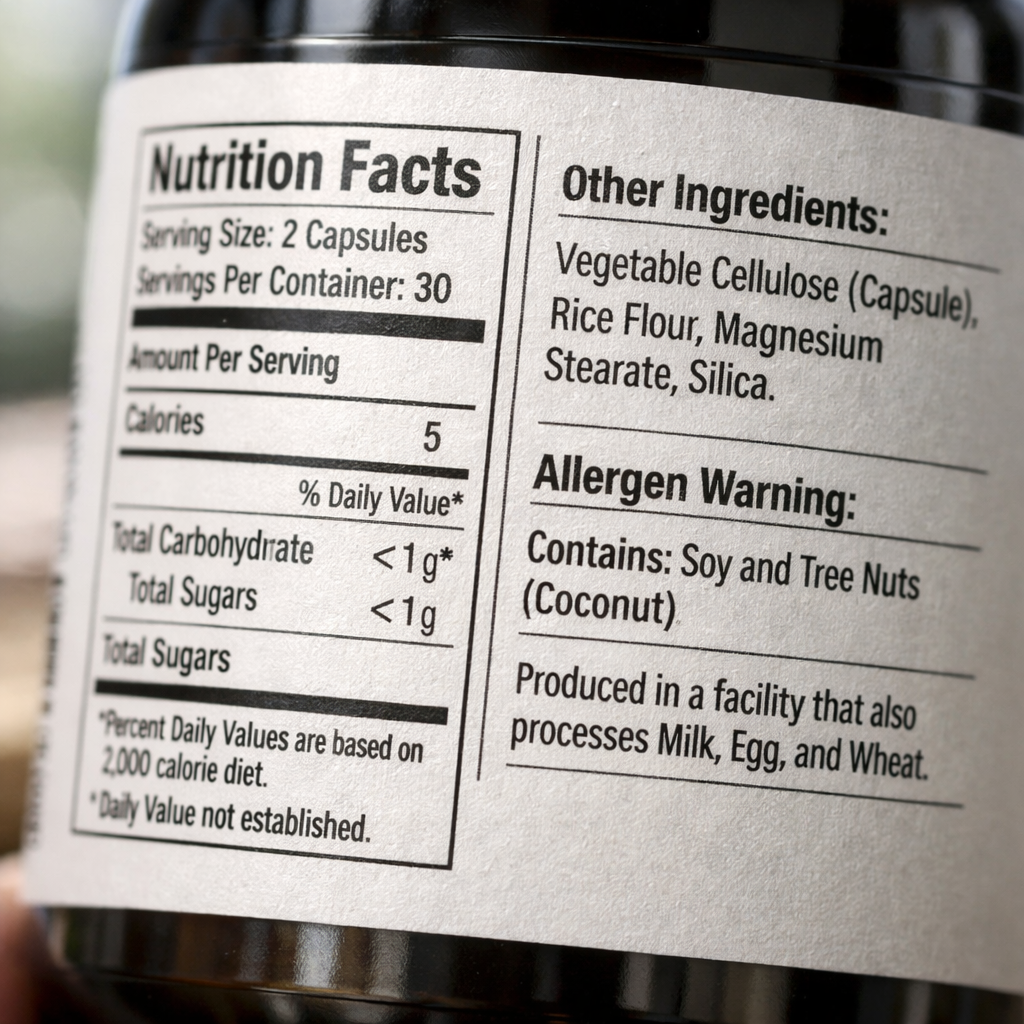
Labeling compliance starts with your ingredient sourcing decisions. You can only claim what your ingredients actually deliver, and you can only make claims supported by adequate substantiation. Structure/function claims like “supports immune health” require different substantiation than nutrient content claims like “high in Vitamin C.” Work with regulatory experts early in product development to ensure your formulation and ingredients support your intended claims—our nutrition facts template guide provides essential frameworks for this process.
Third-party verification dramatically boosts consumer trust and simplifies platform compliance. Certifications from organizations like NSF, USP, or ConsumerLab provide independent confirmation that your products contain what you claim and meet purity standards. While these certifications require investment, they differentiate quality brands from questionable competitors.
Amazon and other major platforms increasingly require dietary supplement vendors to demonstrate DS CGMP compliance through accepted certification programs. Proactively obtaining these certifications before launching on major platforms accelerates your market entry and prevents the frustration of submitting products only to face compliance rejections.
Implementing Your Sourcing Blueprint
Understanding these seven steps matters little without practical implementation. Market leaders convert strategy into action through systematic execution that begins well before the first ingredient purchase.
Start by defining your product concept with specificity. What health benefits will your supplement deliver? What dosages and ingredient forms best support those benefits? What price point and positioning will you target? These decisions drive your ingredient requirements.
Next, build your supplier shortlist through research, industry connections, and partner recommendations. Contact potential suppliers with your detailed specifications and evaluate their responses. Do they ask clarifying questions that demonstrate technical expertise? Do they provide comprehensive information about their quality systems? These interactions reveal which suppliers treat your business seriously—considerations we explore in depth in our guide on avoiding common supplier selection mistakes.
Negotiate terms that protect your interests without being unreasonable. Focus not just on price, but on payment terms, lead times, quality guarantees, and return policies for non-conforming materials. The cheapest ingredient isn’t always the best value when quality issues or delays derail your launch.
Sample and test before committing to full orders. Order small quantities of ingredients and conduct your own verification testing through independent labs. This investment catches quality issues before they affect your product launch and verifies that suppliers deliver what they promise.
Launch with transparency that becomes a marketing asset. Share your sourcing story authentically—where ingredients originate, how you verified quality, what testing protocols you implemented. Modern consumers value transparency and reward brands that demonstrate commitment to quality through detailed sourcing narratives.
Conclusion: Strategic Sourcing Defines Market Leadership
The private label supplements market rewards those who understand that exceptional products begin long before manufacturing. They begin with strategic ingredient sourcing guided by clear specifications, rigorous supplier qualification, comprehensive testing, and unwavering commitment to quality systems.
At NutraAeon, we’ve built our entire business model around supporting this approach. Our philosophy of Quality, Transparency, and Empowerment manifests in industry-leading testing protocols that exceed USP and FDA expectations, complete supply chain visibility from source to delivery, and technical expertise that helps our partners make informed formulation decisions.
The seven steps in this blueprint—understanding regulations, defining specifications, qualifying suppliers, verifying through COAs, implementing quality systems, establishing traceability, and building resilience—create the foundation for products that perform consistently, satisfy regulators, and earn consumer trust. These aren’t shortcuts or optional enhancements. They’re the non-negotiable requirements that separate market leaders from failed launches.
When you source private label supplements strategically, you’re not just buying ingredients. You’re investing in brand reputation, consumer safety, and long-term market success. The difference between brands that thrive and those that disappear isn’t luck—it’s the discipline to implement systematic sourcing strategies that never compromise on quality.
Your next supplement launch can join the ranks of market leaders. It begins with a single decision: to source ingredients with the same care and expertise you apply to every other aspect of your brand. That’s where exceptional products come from—and that’s where market leadership begins.