When you reach for a bottle of supplements, you’re making a choice that affects both your wellbeing and your budget. But here’s the question most people don’t ask: How do you know what’s actually inside that bottle matches what’s printed on the label? The answer lies in understanding quality standards—a complex web of regulations, certifications, and testing protocols that separate trustworthy products from questionable ones.
Quality standards in nutraceutical supplements aren’t just bureaucratic red tape. They’re the foundation that ensures what you’re paying for is what you’re getting. These standards protect four critical aspects of every supplement: identity (is it really what it claims to be?), potency (does it contain the stated amount?), purity (is it free from contaminants?), and labeling accuracy (does the package tell the truth?). When these elements align, you’re investing in your health wisely. When they don’t, you’re essentially throwing money at uncertainty—or worse, risking your health.
The Regulatory Baseline: Understanding CGMP
In the United States, the foundation of supplement quality starts with Current Good Manufacturing Practices, known as CGMP. Established by the FDA under 21 CFR Part 111, these practices set minimum standards for how nutraceutical supplements must be manufactured, packaged, labeled, and stored.
CGMP requirements mandate that manufacturers establish quality control procedures, maintain clean facilities, train personnel properly, and keep detailed records of every production batch. These aren’t suggestions—they’re legal requirements. A manufacturer operating without CGMP compliance is operating outside the law, and their products pose genuine risks to consumers.
However, here’s what many consumers don’t realize: CGMP compliance is just the starting line, not the finish line. It represents the bare minimum that any legitimate manufacturer must meet. Think of it like a restaurant health inspection—passing means you won’t get food poisoning, but it doesn’t guarantee you’ll enjoy an exceptional dining experience.
That’s why forward-thinking supplement manufacturers and ingredient suppliers pursue something beyond basic compliance. They seek third-party certifications that demonstrate a commitment to quality that exceeds regulatory minimums. These certifications require independent audits, rigorous testing protocols, and ongoing verification—creating accountability that goes far beyond what regulators mandate.

Third-Party Certifications: The Gold Standard
Third-party certification means an independent organization has reviewed a manufacturer’s processes and confirmed they meet specific quality benchmarks. These certifications carry weight because they’re earned, not assumed, and they’re verified by experts who have no financial stake in the outcome.
The USP Verified Mark represents one of the most respected certifications in the industry. When you see this mark on a supplement, it means the United States Pharmacopeia has independently tested and verified that the product contains the ingredients listed on the label in the declared potency and amounts. It also confirms the product will dissolve properly in your body, doesn’t contain harmful levels of contaminants, and was manufactured using sanitary and well-controlled procedures. USP testing goes beyond what manufacturers test themselves, providing an extra layer of consumer protection that’s backed by one of the oldest scientific organizations in America.
NSF GMP Certification offers another powerful validation. NSF International, an independent public health organization, conducts unannounced inspections of manufacturing facilities to verify compliance with GMP standards. Their certification process examines everything from ingredient sourcing to finished product testing. What makes NSF certification particularly valuable is its rigor—facilities face surprise audits, and certification must be renewed regularly through continued compliance.
For consumers, these certifications translate directly to confidence. A supplement bearing USP or NSF certification has been independently verified by scientists who understand exactly what quality looks like. It means someone beyond the manufacturer has checked the math, tested the ingredients, and confirmed the claims. In practical terms, it means your money is going toward a product that delivers what it promises.
The European Framework: EFSA and QPS
While the US relies heavily on CGMP and voluntary certifications, Europe approaches supplement regulation through the European Food Safety Authority (EFSA). This organization conducts comprehensive safety assessments for nutrients and ingredients before they can be marketed across the European Union.
EFSA’s evaluation process examines both the safety of nutrient sources and the scientific evidence supporting health claims. When a manufacturer wants to introduce a new ingredient or make a specific health claim, they must submit detailed scientific data for EFSA review. This process ensures that only ingredients with demonstrated safety profiles reach European consumers.
One particularly interesting aspect of European regulation is the Qualified Presumption of Safety (QPS) status. This streamlined assessment applies to specific microorganisms used in supplement production. When a microorganism receives QPS status, it means EFSA has determined that, under certain conditions, it presents minimal safety concerns. This classification reduces the data requirements for manufacturers using these organisms, making the approval process more efficient while maintaining safety standards.
The QPS system reflects a science-based approach to regulation—recognizing that some ingredients have such well-established safety records that they don’t require the same exhaustive review as novel substances. For manufacturers, QPS status can significantly reduce time-to-market for products containing qualifying microorganisms. For consumers, it represents a regulatory environment that balances innovation with safety.
The Critical Role of Sourcing and Traceability
Even the most rigorous manufacturing standards mean little if the raw ingredients entering production are questionable. This is where sourcing and traceability become fundamental to supplement quality.
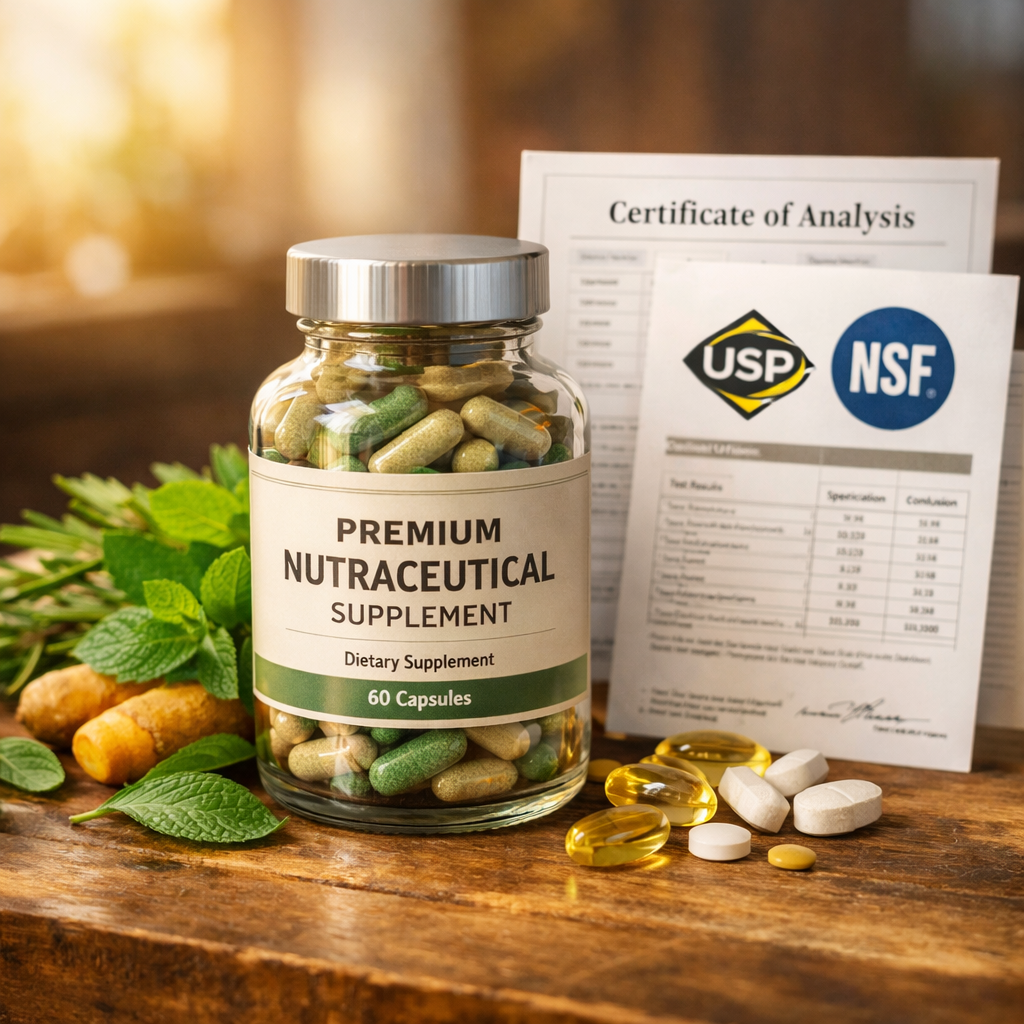
A Certificate of Analysis (CoA) serves as the passport for every ingredient batch. This critical quality documentation provides detailed information about what the ingredient actually contains. issued by testing laboratories, it details purity levels, potency, microbial contamination status, heavy metal content, and more. Reputable ingredient suppliers and manufacturers maintain current CoAs for every batch of raw material they handle.
When you request a CoA from a supplement company and they can provide it immediately, that’s a positive sign. It indicates they’re tracking their ingredients carefully and can verify exactly what went into your bottle. When they can’t produce this documentation, consider it a red flag.
Full supply chain traceability takes this concept further. It means a company can track each ingredient from its original source through every step of processing, manufacturing, and distribution. This capability isn’t just about quality assurance—it’s essential for rapid response if problems arise. When contamination occurs or quality issues emerge, companies with robust traceability can identify affected batches quickly, implement recalls efficiently, and conduct root cause analyses to prevent recurrence.
At NutraAeon, we’ve built our entire business model around transparent sourcing and complete traceability. Every amino acid, vitamin, and mineral in our portfolio comes with comprehensive documentation that tracks its journey from certified suppliers through our quality control processes. This commitment to transparency isn’t just good business practice—it’s how we empower our partners to create products they can stand behind with confidence.
How to Evaluate Nutraceutical Brands
Armed with knowledge about quality standards, you can make more informed decisions when selecting supplements. Here’s what to look for:
Start by checking for regulatory compliance documentation. Legitimate manufacturers should clearly state their CGMP compliance and provide evidence of regular facility inspections. This information is often available on company websites or by direct request.
Look for third-party certifications from recognized organizations like USP, NSF, or other accredited bodies. These marks should be prominently displayed on product labels or company materials. Don’t hesitate to verify certifications independently—most certifying organizations maintain online databases where you can confirm a product’s status.
Request current Certificates of Analysis. Companies committed to transparency will make CoAs readily available, either on their websites or through customer service. These documents should be specific to the batch number on your product, not generic templates. Pay attention to what the CoA includes—it should cover purity, potency, microbial testing, and heavy metal screening at minimum.
Investigate supply chain transparency. Quality-focused companies often share information about where their ingredients come from and how they’re processed. They might feature supplier partnerships, discuss their sourcing philosophy, or provide details about ingredient origins. This transparency indicates a company that’s confident about what goes into their products.
Favor brands with proactive quality programs that exceed regulatory minimums. Companies that invest in multiple third-party certifications, conduct testing beyond what’s required, and openly share quality data demonstrate a commitment to excellence that protects both your health and your investment.
Ask questions. Reputable companies welcome inquiries about their quality practices. They employ knowledgeable staff who can explain their testing protocols, certification status, and sourcing strategies. If a company is evasive or dismissive when you ask about quality standards, take your business elsewhere.
The Bottom Line: Quality Standards and Your Investment
The nutraceutical supplements you choose should represent more than hope in a bottle—they should reflect a genuine commitment to your wellbeing backed by verifiable quality standards. Trustworthy products combine robust manufacturing practices, independent verification through third-party certification, transparent sourcing with full traceability, and clear test data that proves what’s inside matches what’s promised.
These elements aren’t luxury features reserved for premium brands. They’re fundamental requirements that every supplement should meet. When you pay for a product that contains 500mg of L-Theanine, you deserve exactly that amount of pure, properly identified L-Theanine—not an approximation, not a substitute, and certainly not contaminated material.
This philosophy of quality, transparency, and empowerment drives everything at NutraAeon. We partner with forward-thinking manufacturers who understand that exceptional supplements start with exceptional ingredients. Our comprehensive testing protocols exceed USP and FDA expectations because meeting minimum standards has never been our goal. We provide complete documentation, maintain full supply chain visibility from source to delivery, and back every ingredient with the technical expertise and regulatory guidance our partners need to succeed.
When you choose supplements from manufacturers who source their ingredients through partners committed to these standards, you’re not just protecting your health—you’re making a smart financial decision. Quality supplements deliver the benefits you’re paying for, reducing waste on ineffective products and supporting your wellness goals efficiently.
Your health deserves ingredients you can trust. Your wallet deserves products that deliver genuine value. Quality standards make both possible, transforming supplements from acts of faith into evidence-based investments in your wellbeing. The next time you evaluate a supplement, look beyond the marketing claims and examine the quality foundations. Your body—and your budget—will thank you.