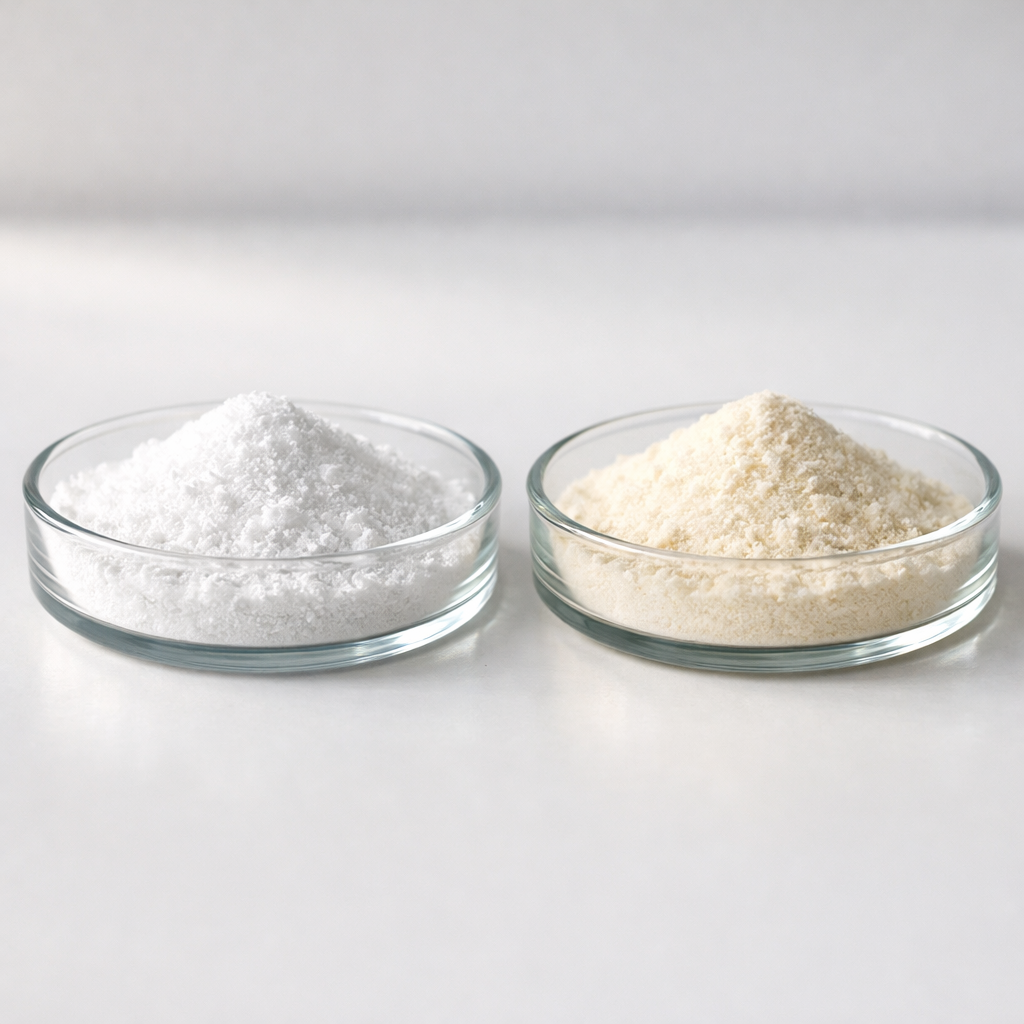
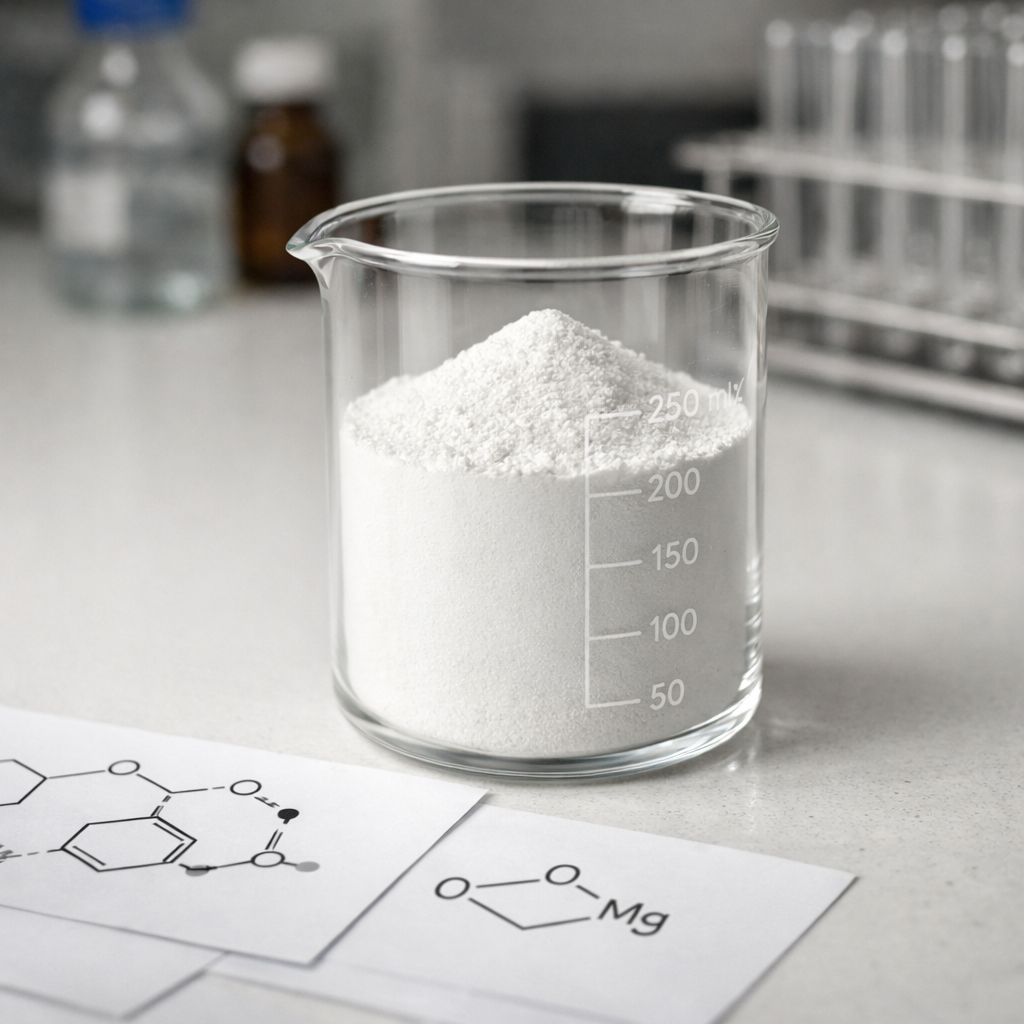
Not all magnesium is created equal — and if you’ve been sourcing on price alone, you’re probably already dealing with the consequences. Reformulation requests. Customer complaints about GI distress. Products that test fine on paper but underdeliver in practice.
The real issue is almost always the form. Magnesium supplement forms vary enormously in bioavailability, elemental content, solubility, and manufacturing complexity. Getting this decision right upstream — at the ingredient sourcing stage — determines whether your finished product delivers results or just delivers magnesium on the label. And as we covered in our magnesium oxide deep dive, even within a single form, grade and sourcing origin matter more than most buyers expect.
This guide is written for formulators and procurement leads who need to make that call with real data, not marketing claims.
Why Bioavailability Is the Number That Actually Matters
Elemental magnesium content and bioavailability are not the same thing — and confusing the two is one of the most expensive mistakes a formulator can make.
Magnesium oxide, for instance, contains roughly 60% elemental magnesium by weight. That’s the highest of any common form. But multiple clinical studies, including a systematic review published in Nutrition (2021), found that organic magnesium salts consistently outperform inorganic forms in absorption. Magnesium glycinate and citrate showed measurably superior bioavailability compared to oxide in head-to-head trials. The NIH Office of Dietary Supplements notes that magnesium from organic salts dissolves more readily and tends to be better absorbed than inorganic forms like oxide.
In practical terms: a product delivering 400mg of magnesium oxide is not delivering 400mg of usable magnesium to the body. The gap between label claim and physiological delivery is where supplement efficacy lives — and where your brand reputation is built or broken.
“The tissue distribution pattern matters as much as the absorption percentage. Two forms with similar serum magnesium readings can have dramatically different outcomes in target tissues like the brain or muscle.” — Dr. Carolyn Dean, clinical magnesium researcher and author of The Magnesium Miracle
Inorganic Forms: Oxide and Chloride
Magnesium oxide is the workhorse of the category. It’s cheap, stable, and packs more elemental magnesium per gram than anything else — approximately 60% by weight. That makes it a logical choice for high-dose products where cost per milligram matters and the application doesn’t depend on rapid absorption, such as laxative-effect supplements or antacid formulations.
But its solubility in aqueous environments is poor. In a neutral or alkaline gut environment, magnesium oxide doesn’t break down efficiently, which is exactly why absorption rates hover around 4% in some published studies. Manufacturers sourcing oxide for sleep or muscle recovery products are often setting themselves up for reformulation conversations 18 months later.
Magnesium chloride sits in a different position. It’s highly soluble — which is why it’s frequently used in topical applications and bath flakes — and shows meaningfully better oral bioavailability than oxide. The tradeoff is lower elemental content (roughly 12%) and a stronger mineral taste that creates formulation challenges in flavored formats.
For bulk sourcing, both forms are widely available from Chinese manufacturers with well-established production infrastructure. Quality verification centers on elemental assay accuracy and heavy metal testing — particularly lead, arsenic, and cadmium, which can concentrate in mineral salts depending on the ore source.
Organic Acid Salts: The Mid-Tier Sweet Spot
Citrate, malate, and lactate represent the most commercially significant magnesium forms for general wellness and sports nutrition. They’re soluble, reasonably well-absorbed, and competitively priced for the bioavailability they deliver.
Magnesium citrate is probably the most widely studied form outside of oxide. Its absorption is dose-dependent — smaller doses absorb proportionally better — and a 2019 PMC bioavailability study confirmed it outperforms oxide on standard absorption measures. Citrate is a practical choice for sleep formulas, general mineral supplementation, and stress products. It dissolves cleanly in water, making it suitable for powder drink mixes and ready-to-drink formats.
Magnesium malate is particularly useful for energy and fatigue-focused applications. Malic acid is a key intermediate in the Krebs cycle, which gives malate a functional angle beyond simple mineral delivery. Formulators targeting exercise recovery or general fatigue markets can build a credible clinical narrative around this pairing. One practical note: magnesium malate is slightly acidic in solution, which can affect tablet coating adhesion — worth validating in pilot batches before scaling.
Magnesium lactate is gentler on the GI tract than citrate, making it worth considering for products targeting consumers with sensitive digestion. It’s less commonly used, which can create longer sourcing lead times — not all suppliers carry it in ready stock.
When sourcing organic acid salts, the critical quality markers are chelation confirmation (verifying the mineral is actually bound to the organic acid, not simply mixed), moisture content, and consistent particle size for capsule-fill applications. A spec sheet that lists assay without specifying the analytical method is a red flag. For broader ingredient sourcing context, our nutraceutical manufacturing quality guide covers these documentation requirements in depth.
Amino Acid Chelates: Premium Positioning with Real Science
Magnesium glycinate — also sold as magnesium bisglycinate — is where the category gets genuinely interesting from a formulation standpoint. The glycine chelation creates a protected transport pathway through the intestinal wall, bypassing some of the absorption competition that occurs with inorganic and organic acid forms. The result is high bioavailability with significantly lower rates of GI side effects.
This matters for a specific and growing segment of the market: consumers who have tried other magnesium products and experienced loose stools or digestive discomfort. Products built on bisglycinate can credibly claim “gentle on the stomach” — and for this audience, that’s not a minor differentiator.
The sourcing complexity is real, however. True bisglycinate requires controlled chelation manufacturing, and the finished ingredient must meet TRAACS or equivalent amino acid chelate standards to justify the premium price. Manufacturers sourcing “magnesium glycinate” from suppliers who can’t provide chelation verification are often buying a mixture of glycine and magnesium oxide — which performs nothing like a true chelate in vivo.
For bisglycinate specifically, always verify the glycine-to-magnesium ratio in the COA. A genuine bisglycinate has two glycine molecules per magnesium ion. Partial chelation is a documented quality shortcut that meaningfully compromises both absorption and the secondary glycine benefit.
Specialized Forms: L-Threonate, Taurate, and Orotate
These forms occupy the premium tier and address niche clinical targets. The price points are higher, sourcing is more specialized, and the formulation economics need to be built in from the start — but for the right product, they represent genuine differentiation.
Magnesium L-threonate is the most researched brain-targeted form. Developed at MIT, it was specifically engineered to cross the blood-brain barrier more efficiently than other forms. Research published in the journal Neuron demonstrated that it increased synaptic density and improved learning and memory markers in preclinical models. Human trials have followed, targeting cognitive aging and sleep architecture. For nootropic stacks and brain health supplements, this is the ingredient that enables a credible clinical narrative — at a cost premium of 4–8x over standard forms.
The sourcing reality: L-threonate is produced by a small number of manufacturers globally. Magtein holds the original patent-based production, but generic forms are available from Chinese producers. Quality verification here requires independent third-party testing of both the L-threonate content and the magnesium assay — substitution with lower-grade materials is a documented risk at this price point.
Magnesium taurate combines magnesium with taurine, both of which have cardiovascular and neurological relevance. It’s a logical pairing for heart health and nervous system support products, though clinical data specific to the combined form remains thinner than for the individual components.
Magnesium orotate is frequently cited in performance and cardiac health contexts. It penetrates cell membranes more readily than standard salts, which is theoretically advantageous for intracellular delivery. It’s used in some European pharmaceutical preparations, which adds regulatory credibility in premium international markets.

Sourcing from China: What Verification Must Include
China is the dominant global producer of magnesium ingredients — particularly oxide, citrate, and glycinate — and the quality range is significant. The gap between a GMP-certified, ISO-audited facility and a commodity exporter selling into the same ingredient category is not visible from a spec sheet alone. The principles that apply to supplement ingredient testing apply equally here — documentation must be verified, not assumed.
A rigorous verification process for magnesium compounds should include:
- Current GMP certification from a recognized certifying body (NSF, SGS, Bureau Veritas) — request the actual certificate, not a declaration
- Full COA with method references — each test should cite the analytical method used (e.g., ICP-MS for heavy metals, HPLC for organic acid confirmation)
- Elemental assay accuracy — for complex forms like bisglycinate, request assay results for both magnesium content and the chelating agent separately
- Heavy metals panel — lead, arsenic, cadmium, and mercury at minimum; tighter limits apply for products targeting pediatric or prenatal markets
- Stability data — particularly relevant for chelated forms, which can degrade under high humidity or temperature during transit and storage
- Third-party audit reports from the past 12 months — carries significantly more weight than self-certification
Smaller manufacturers sourcing 25kg to 500kg quantities sometimes skip several of these steps because the per-batch verification cost feels disproportionate to the order size. That calculation reverses quickly when a batch fails incoming QC — or, worse, when a finished product fails a third-party market surveillance test post-launch. For compliance context, our FDA supplement regulatory guide outlines exactly what documentation is required under 21 CFR Part 111.
A Practical Decision Framework for Formulators
Every sourcing decision starts with three questions: What is this product supposed to do? Who is buying it? What’s the cost-per-serving ceiling?
For a budget-positioned general wellness capsule where the primary claim is daily magnesium support, citrate or a citrate/oxide blend delivers adequate bioavailability at a competitive cost. The label tells a clean story and the margin works.
For a premium sleep formula targeting consumers willing to pay $45–60 for a 30-day supply, glycinate is the form that justifies the price point. The “gentle, absorbable magnesium” claim is defensible, the GI tolerance advantage is real, and consumers in this segment have often already tried and abandoned cheaper products.
For a nootropic or cognitive health stack at the premium end of the market, L-threonate is the only form with the clinical evidence to support brain-specific positioning. Build the cost into your formulation economics before you finalize the product concept.
The mistake most brands make isn’t choosing the wrong form — it’s choosing the right form from the wrong supplier, or choosing without verifying that what they’re buying actually matches what the spec sheet claims. Those are sourcing problems, and they’re solvable before you ever run a batch.
NutraAeon works with North American manufacturers at every scale — from 25kg R&D samples through to full container loads — to source verified magnesium compounds with full documentation and credentialed factory backing. Contact our sourcing team if your current supplier can’t provide chelation confirmation, a complete heavy metals panel, and a current GMP certificate for every magnesium form you’re buying — that’s a gap worth closing before your next product launch.