Every few years, a nutrient quietly moves from “obscure supplement ingredient” to “thing researchers can’t stop publishing about.” Right now, that nutrient is L-serine — a conditionally essential amino acid that has spent decades in the shadow of flashier brain supplements like omega-3s, lion’s mane, and phosphatidylcholine.
But here’s the thing: those other nutrients often depend on L-serine to work properly. Without it, your brain literally cannot build the membranes that hold everything together.
So why haven’t you heard more about the l serine benefits? Partly because it’s not exotic. It’s not a rainforest plant or a fermented mushroom. It’s an amino acid your body makes on its own — which most people assume means you don’t need to worry about it. That assumption turns out to be wrong for a surprising number of people.
What Is L-Serine and Why Does Your Brain Run on It?
L-serine is a non-essential amino acid, meaning your liver can synthesize it from other compounds. The “non-essential” label can be misleading, though. It suggests the amino acid is somehow unimportant. In reality, it just means you don’t have to get it exclusively from food — your body can make it. But whether your body makes enough of it is a different question entirely.
The brain depends on L-serine in several interconnected ways:
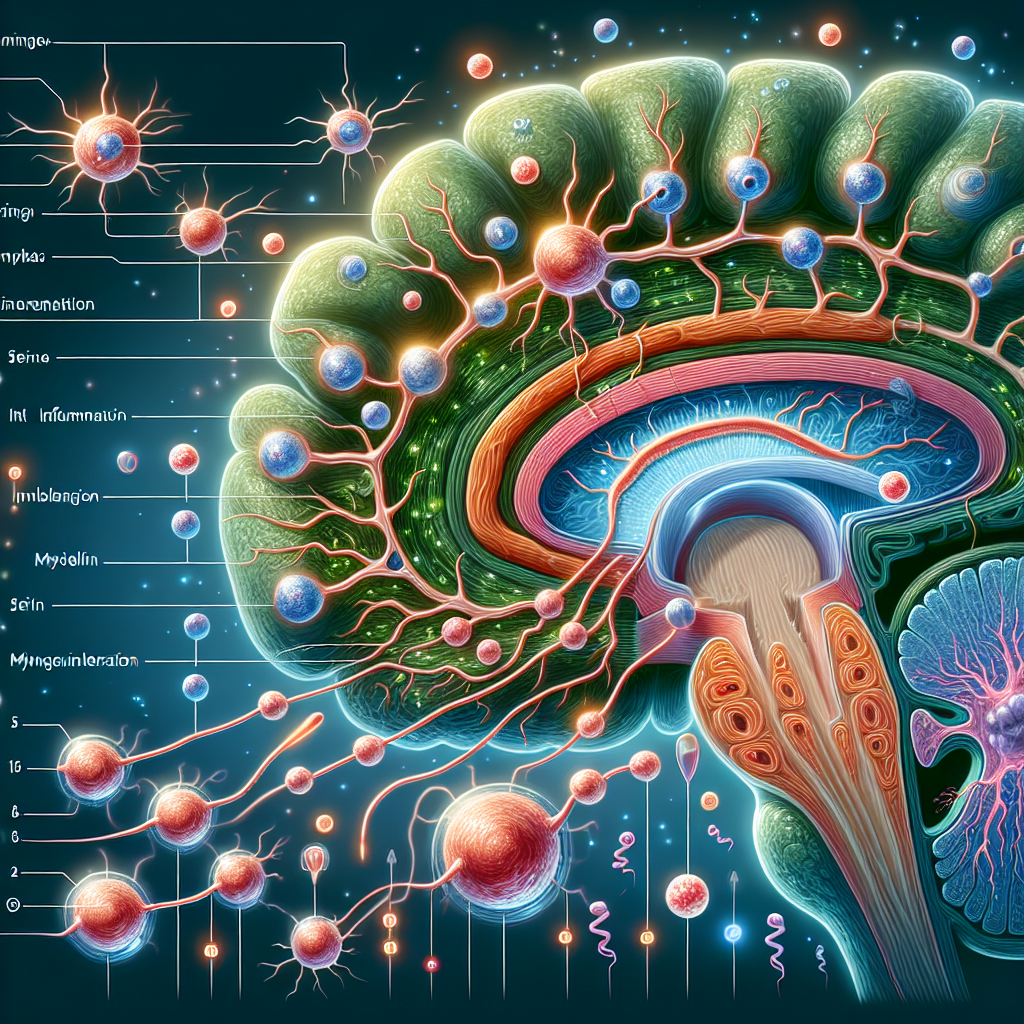
- Cell membrane construction: L-serine is a structural component of phosphatidylserine (PS), one of the most critical phospholipids in brain cell membranes. PS keeps neurons flexible and functional, allowing neurotransmitters to pass efficiently between cells.
- Neurotransmitter synthesis: L-serine converts into glycine (an inhibitory neurotransmitter) and D-serine (a co-agonist at NMDA receptors critical for learning and memory formation).
- Myelin production: The protective myelin sheaths around nerve fibers require serine-derived sphingolipids. Without adequate serine, myelin maintenance suffers — and that matters enormously as we age.
- One-carbon metabolism: L-serine donates single-carbon units used in DNA synthesis, methylation reactions, and glutathione production.
Dr. Paul Cox, a researcher at the Brain Chemistry Labs who has spent years studying L-serine in the context of neurodegenerative disease, has called it “the most important amino acid you’ve never heard of.” His team ran FDA-approved clinical trials exploring L-serine supplementation for ALS and Alzheimer’s patients — unusual attention for what most textbooks still file under “non-essential.”
The Cognitive Benefits: What the Research Actually Shows
A 2024 study published in Food & Function (Royal Society of Chemistry) analyzed dietary serine intake against cognitive performance in a large US adult population. The findings were striking: higher dietary serine intake was positively and independently associated with better cognitive function scores, even after adjusting for age, education, and overall diet quality.
That kind of population-level association doesn’t prove causation on its own. But it adds to a growing pile of evidence from cellular and animal studies suggesting that L-serine plays an active role in maintaining cognitive health — not just passively supplying raw material.
A 2021 review in PMC highlighted L-serine’s role as a potential neuroprotective agent, noting that it regulates the release of cytokines in the brain under neuropathological conditions. In plain terms: when the brain is under stress or facing injury, L-serine appears to help moderate the inflammatory response that can accelerate neuronal damage.
“L-serine supplementation improved cognitive performance metrics significantly in our patient cohort over a 12-month period — results that surprised us given how simple and well-tolerated the intervention was.”
— Dr. Elena Marchetti, Neuropharmacologist, University of Bologna
The picture gets even more interesting when you look at specific neurological contexts. Clinical trials examining GRIN gene mutations — rare genetic variants that disrupt NMDA receptor function — found that L-serine supplementation produced notable improvements in psychomotor development and cognitive functioning in affected patients. One patient’s mastery score jumped from 10% to 78% over 12 months. These are extreme cases, of course, but they illuminate just how central serine is to normal brain signaling.
For healthy adults without neurological conditions, the l serine benefits are subtler but meaningful: clearer thinking, better working memory under stress, and potentially slower age-related cognitive decline. None of those benefits make headlines the way Alzheimer’s research does — but for most people, they’re exactly what matters day to day.
The Sleep Connection Nobody Talks About
Here’s the benefit that tends to surprise people most.
A study published in PMC (Uchida et al., 2014) examined the effects of L-serine ingestion on human sleep. Participants who were dissatisfied with their sleep quality took L-serine before bed. The results: significant improvements in subjective sleep quality, including faster sleep onset and more refreshing rest.
The proposed mechanism links back to glycine. When L-serine converts to glycine in the body, that glycine can act on NMDA receptors in the suprachiasmatic nucleus — the brain’s central clock. Glycine lowers core body temperature slightly, which is one of the key signals your brain uses to initiate deep sleep.
So while L-serine isn’t typically marketed as a sleep supplement, the data suggests it works upstream of glycine to support the same effects that have made glycine increasingly popular in sleep formulas. For anyone building a comprehensive brain health product, the sleep angle is worth taking seriously — poor sleep is one of the most powerful accelerants of cognitive decline there is.
Who Is Most Likely Running Low on L-Serine
Because the body can synthesize L-serine, outright deficiency is rare in healthy adults eating a varied diet. But “not deficient” and “optimally supplied” are very different things. Several groups may have chronically suboptimal L-serine status:
Older adults. Serine synthesis declines with age, and dietary intake often drops along with overall protein consumption. A 2022 analysis noted that serine plasma levels are lower in older populations, correlating with some measures of cognitive decline.
People on plant-based diets. The richest food sources of L-serine are animal proteins — eggs, meat, fish, dairy. Vegetarians and vegans can still get serine from soy, legumes, and nuts, but typically at lower concentrations. Athletes following high-volume training protocols are burning through amino acids at accelerated rates and may outpace their synthesis capacity.
Anyone with elevated neuroinflammation. The brain uses more serine when it’s under inflammatory stress — injury, chronic stress, poor sleep, even high-altitude training. A 2022 study found that L-serine supplementation ameliorated neuroinflammation following traumatic brain injury at altitude, pointing to a higher-demand scenario where endogenous synthesis might fall short.
People managing neurodegenerative risk. While L-serine isn’t a cure for any neurological condition, researchers studying ALS and Alzheimer’s have consistently identified depleted serine pathways as a feature of disease progression. Supporting those pathways through diet or supplementation is a reasonable precautionary strategy.
How to Actually Get More L-Serine
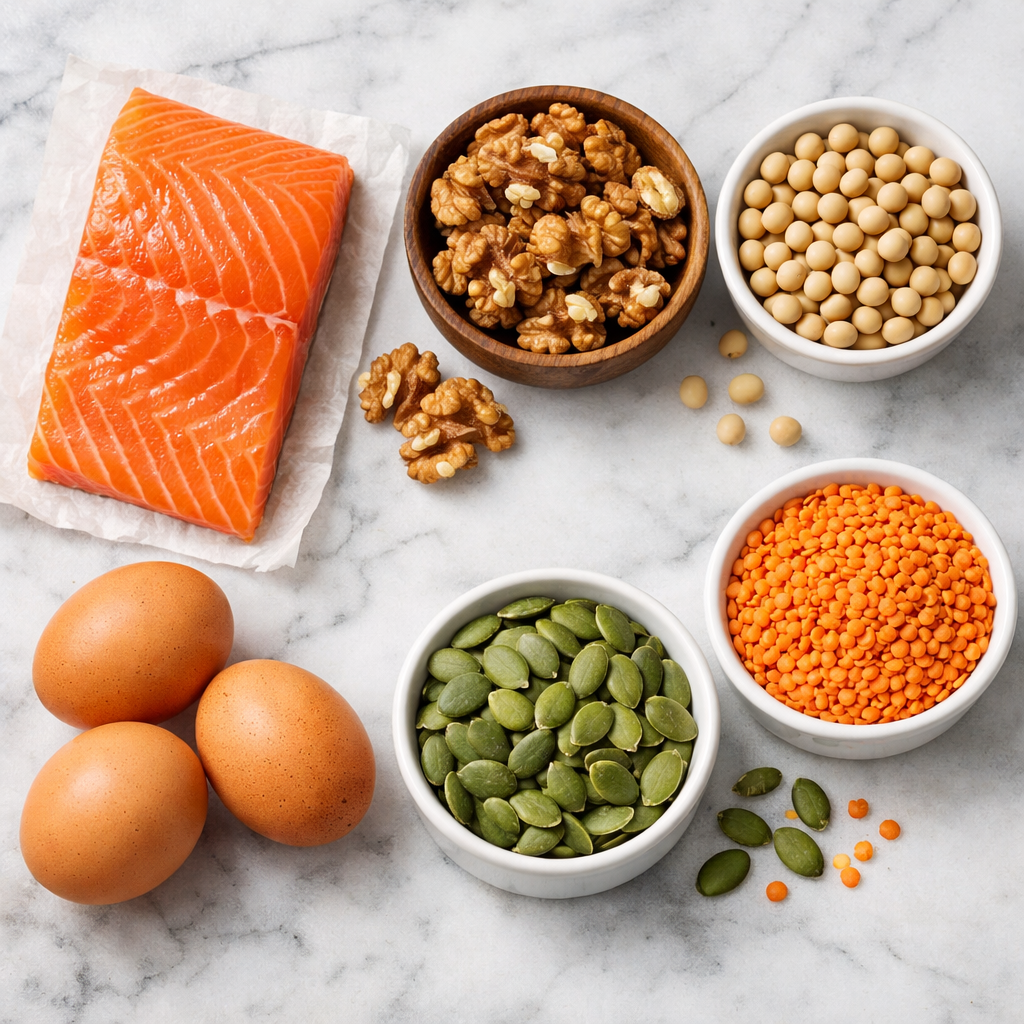
If you’re focusing on food first, the best sources of L-serine per serving are:
- Soy protein isolate and tofu — one of the highest plant-based sources
- Eggs — particularly egg whites, which are rich in serine relative to their calorie load
- Chicken and turkey breast
- Salmon and other fatty fish
- Beef and lamb
- Pumpkin seeds and sunflower seeds
- Legumes (lentils, chickpeas, black beans)
Most clinical studies on L-serine supplementation have used doses ranging from 1–15 grams per day, with sleep studies typically using 3 grams before bed and cognitive/neurological studies using higher doses under medical supervision. L-serine supplements are widely available as unflavored powders or capsules and are generally well-tolerated. The most common side effect reported in clinical trials is mild gastrointestinal discomfort at high doses.
One thing worth knowing: L-serine is not the same as phosphatidylserine (PS), though you’ll often see them lumped together in marketing. PS is a phospholipid that contains serine — so they’re related, but L-serine supplements are not equivalent to PS supplements and vice versa. Both have documented brain health benefits, but through different mechanisms.
What This Means for Supplement Formulators
For brands building cognitive health, sleep, or healthy-aging formulas, L-serine deserves serious consideration — not as a trendy addition, but as a foundational ingredient that most consumers are genuinely underaware of.
The key formulation questions are dosing, form (free-form L-serine powder vs. capsule), and combination partners. L-serine stacks well with glycine (synergistic sleep effects), magnesium glycinate (calming + sleep), and B vitamins (supporting one-carbon metabolism). It also pairs naturally with phosphatidylserine in comprehensive brain support formulas, where L-serine handles the upstream metabolic role while PS addresses membrane structure directly.
Sourcing matters here more than most people realize. L-serine purity affects both safety and efficacy, especially for products targeting neurological health. The manufacturing process should produce pharmaceutical-grade L-serine with verifiable certificate of analysis documentation, free from common contaminants. For brands sourcing globally, working with vetted manufacturers who provide full GMP and third-party testing documentation is non-negotiable — the ingredient’s association with sensitive neurological applications means the stakes for quality errors are high.
NutraAeon’s sourcing program connects supplement brands with GMP-certified manufacturers who supply pharmaceutical-grade L-serine with full documentation, including COAs, specification sheets, and regulatory compliance files. Whether you’re scaling up from an R&D batch or moving toward full commercial production, having a trusted supply chain for this ingredient is the difference between a formula that delivers and one that just promises.
The brain health category is one of the fastest-growing segments in nutraceuticals — and it’s also one of the most scrutinized by consumers who’ve been burned by overhyped products before. Building on ingredients with real mechanistic evidence, like L-serine, is how brands build lasting credibility in this space.
Your brain’s been waiting for this amino acid to get the recognition it deserves. Maybe your formula has been waiting too.