The supplement industry stands at a critical crossroads. While consumer demand for nutritional products continues to surge, the stakes have never been higher for manufacturers. A single supplier mistake can trigger devastating recalls, destroy brand reputations built over decades, and expose companies to millions in liability costs. In 2024 alone, salmonella contamination in a popular greens supplement led to at least 45 illnesses across nearly two dozen states, forcing a complete product recall and irreparably damaging consumer trust.
The difference between products that build lasting customer loyalty and those that generate FDA warning letters often comes down to one fundamental decision: choosing the right ingredient supplier. Yet many manufacturers treat supplier selection as a transactional box-checking exercise rather than the strategic risk management decision it truly represents. This approach leaves companies vulnerable to quality failures, regulatory violations, and supply chain disruptions that could have been prevented.
For forward-thinking supplement manufacturers, the message is clear: your ingredient supplier becomes an extension of your quality system. Their failures become your failures. Their certifications become your compliance foundation. Their transparency becomes your competitive advantage. Understanding the seven critical criteria that separate reliable suppliers from risky ones isn’t just good business practice—it’s the cornerstone of product safety and long-term success.

Regulatory Compliance: The Non-Negotiable Foundation
Before evaluating any other aspect of a potential ingredient supplier, manufacturers must verify that regulatory compliance forms the bedrock of the supplier’s operations. This isn’t about simply asking whether a supplier claims to follow regulations. It requires verifiable documentation and current certifications that prove compliance.
Start by requesting copies of relevant certifications such as NSF International, Informed Choice, or organic certifications specific to your product needs. These documents should be current, not expired versions from years past. A supplier who hesitates to provide up-to-date certificates raises immediate red flags.
Beyond certifications, examine whether the supplier maintains compliance with FDA regulations, particularly current Good Manufacturing Practices (cGMP). For international suppliers, verify they meet comparable standards in their home countries and understand FDA import requirements. The 2024 FDA enforcement trends show increasing scrutiny of supplement manufacturers, with violations often traced back to ingredient sourcing decisions made years earlier.
Regulatory compliance also extends to proper labeling requirements and accurate ingredient declarations. Your supplier should provide complete transparency about what’s in their ingredients, including any processing aids, excipients, or potential allergens. This documentation becomes critical if you ever face regulatory inspection or need to substantiate label claims.
Remember that compliance isn’t static. Regulations evolve, standards tighten, and new testing requirements emerge. The right supplier stays ahead of these changes, proactively updating their processes rather than scrambling to catch up after violations surface.
Quality Systems and Supplier Capability: Beyond Basic Standards
A certificate hanging on a wall doesn’t guarantee consistent quality. What matters is whether your ingredient supplier has implemented formal quality management systems that function day-to-day, batch-to-batch, throughout their operations.
Look for suppliers who operate under internationally recognized quality frameworks such as ISO 9001 or industry-specific standards like ISO 22000 for food safety management. But don’t stop at asking about certifications. Dig deeper into their Corrective and Preventive Action (CAPA) processes. How do they respond when quality issues arise? A robust CAPA system demonstrates that a supplier doesn’t just catch problems—they systematically prevent recurrence.
Test method reliability represents another crucial element of supplier capability. Your ingredient supplier should employ validated analytical methods, not just any equipment that produces numbers. Ask about their testing protocols. Do they follow USP monographs where applicable? How do they validate new testing methods? What proficiency testing programs do they participate in?
At NutraAeon, we exceed standard expectations by implementing industry-leading testing protocols for every ingredient category we supply. Our L-Theanine undergoes multiple purity verification steps. Our Vitamin C forms receive heavy metal screening that goes beyond USP requirements. This approach to quality systems isn’t about checking boxes—it’s about building confidence that every batch meets the exacting standards health-conscious consumers expect.
Consider the supplier’s technical capabilities as well. Can they provide particle size analysis for mineral ingredients? Do they understand solubility challenges in different formulation matrices? A supplier who offers technical expertise becomes a formulation partner, not just a vendor.
Material Specifications and Documentation: The Devil in the Details
Vague ingredient specifications create opportunities for quality drift, substitution, and ultimately product failures. The most reliable suppliers maintain strict, detailed material specifications that leave no room for interpretation or deviation.
Request complete specifications for any ingredient you’re considering. These should include identity markers, purity parameters, acceptable ranges for key characteristics, microbial limits, heavy metal limits, and any other relevant quality attributes. The specification should read like a detailed blueprint, not a general description.
Pay particular attention to specification ranges. Unusually wide acceptable ranges might indicate process inconsistency or the supplier’s inability to control critical parameters. Conversely, specifications that seem too tight might suggest the supplier doesn’t actually test every parameter they list.
Documentation extends beyond specifications to encompass lot traceability tied directly to your finished products. Every ingredient batch should arrive with a Certificate of Analysis (COA) that matches that specific lot number. The COA should report actual test results, not just “meets specification” checkmarks. Real numbers allow you to track trends, identify drift, and make informed decisions about formulation adjustments.
This traceability becomes vital during recalls. If a quality issue emerges with your finished product, you need to rapidly identify which ingredient lots were involved, which other products used those lots, and where those products shipped. Suppliers who maintain detailed lot records enable this rapid response. Those with poor documentation turn recalls into nightmares.
Robust documentation also protects you during regulatory inspections. FDA investigators increasingly request ingredient sourcing records, including supplier qualifications and ingredient testing documentation. A supplier who provides complete, organized documentation simplifies your compliance burden considerably.
Traceability and Data Integrity: Following the Chain
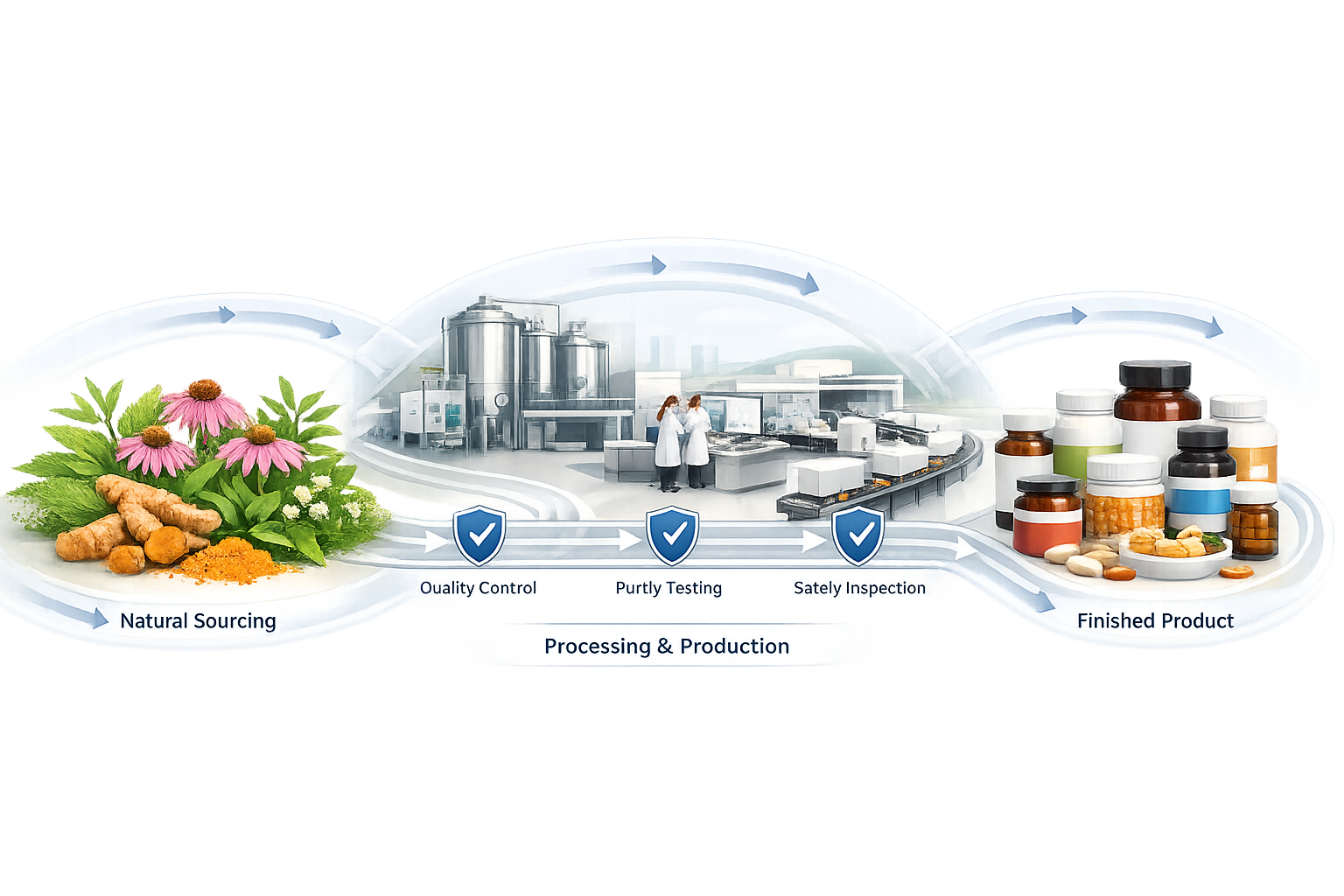
Supply chain transparency has evolved from a nice-to-have feature to a fundamental requirement in the supplement industry. Modern consumers and regulators alike demand to know where ingredients originate, how they’re processed, and what happens at every step between source and finished product.
The right ingredient supplier provides complete audit trails from raw material sourcing through final ingredient delivery. This means being able to answer questions like: Where was this botanical harvested? Which extraction facility processed it? What transportation conditions did it experience? Which storage facility held it before delivery?
Data integrity represents the backbone of effective traceability. Systems should capture accurate information in real-time, not recreated weeks later from memory or loose notes. Look for suppliers who use modern quality management software that timestamps entries, prevents retroactive changes without documented justification, and maintains secure backups.
Electronic systems shouldn’t just store data—they should make it accessible and useful. Can the supplier quickly pull up complete history for a specific lot number? Can they generate reports showing all lots produced within a date range? Can they identify which customers received material from a specific raw material source?
This level of traceability becomes critical if you ever face a recall situation. The Live It Up Super Greens recall in 2024 demonstrated how quickly contamination can spread and how vital rapid identification becomes. Companies with robust traceability systems contained the problem quickly. Those without detailed records faced extended uncertainty and broader recalls.
At NutraAeon, we believe transparency isn’t just about meeting requirements—it’s about empowering manufacturers to make confident decisions. That’s why we provide complete documentation and supply chain visibility from source to delivery for every ingredient in our portfolio, from our Amino Acid Series to our comprehensive Vitamin and Mineral offerings.
Risk-Based Supplier Qualification: Strategic Assessment
Not all suppliers present equal risk to your business. A supplier providing a novel botanical with limited commercial history presents different risks than one supplying a well-characterized vitamin with decades of safe use. Your qualification process should reflect these differences through risk-based assessment.
Begin by categorizing ingredients and suppliers according to risk level. Consider factors like regulatory classification, potential for contamination, complexity of supply chain, supplier’s quality history, and criticality to your product portfolio. Higher-risk suppliers warrant more intensive qualification and ongoing monitoring.
The qualification process itself should be systematic and documented. Create a standardized supplier questionnaire that covers all critical areas: regulatory compliance, quality systems, testing capabilities, supply chain management, financial stability, and business continuity planning. Don’t accept generic marketing responses—require specific details and supporting evidence.
For high-risk suppliers, conduct on-site audits before approval. Virtual audits became common during the pandemic, but nothing replaces walking through a facility, observing actual operations, and speaking directly with quality personnel. Look for alignment between documented procedures and actual practices. The gap between what’s written and what’s done often reveals more than either alone.
Ongoing monitoring prevents qualified suppliers from degrading over time. Establish key performance indicators such as on-time delivery rates, certificate of analysis accuracy, complaint frequency, and responsiveness to quality issues. Regular performance reviews create accountability and identify problems before they escalate to recalls.
This risk-based approach doesn’t mean accepting lower standards for low-risk suppliers. It means allocating your qualification resources strategically to protect your business most effectively. Every supplier must meet your baseline requirements, but higher-risk relationships warrant deeper investigation and more frequent reassessment.
Dual Sourcing and Contingency Planning: Building Resilience
Supply chain disruptions have emerged as one of the most significant risks facing supplement manufacturers. Natural disasters, geopolitical tensions, quality failures, and capacity constraints can instantly transform a single-source ingredient into a production bottleneck that threatens your entire business.
Smart manufacturers implement dual sourcing strategies for critical ingredients. This doesn’t mean simply having two suppliers on your approved list. It means actively qualifying and periodically ordering from secondary sources to maintain relationships and verify capabilities. A supplier who hasn’t received orders in eighteen months may not be able to deliver when you urgently need them.
Dual sourcing provides additional benefits beyond supply continuity. It creates competitive pressure that can improve pricing and service from both suppliers. It offers formulation flexibility if one source experiences quality variations. It demonstrates to customers and regulators that you’ve implemented robust business continuity planning.
However, dual sourcing introduces its own complexities. Different suppliers may provide ingredients with subtle characteristic variations that affect finished product performance. You need to validate that formulations work acceptably with either source. This requires additional testing during development but prevents scrambling during supply disruptions.
Contingency planning extends beyond having alternate suppliers. It includes maintaining safety stock for critical ingredients, understanding lead time requirements, and establishing clear communication protocols with suppliers about potential disruptions. The best suppliers proactively alert customers to anticipated problems rather than creating surprises.
Consider geographic diversification as well. Suppliers located in the same region face similar risks from regional events. An earthquake, hurricane, or political instability affects all suppliers in that area simultaneously. Geographic diversity provides true resilience.
At NutraAeon, we maintain a comprehensive global supply network specifically to provide manufacturers with reliable ingredient access regardless of regional disruptions. Our sourcing strategy prioritizes supply continuity while never compromising our rigorous quality standards.
Supplier Performance Management: Continuous Improvement
Qualification represents just the beginning of the supplier relationship. The most successful manufacturers implement ongoing performance management systems that drive continuous improvement and maintain accountability.
Establish clear metrics that matter to your business and track them consistently. On-time delivery percentage reveals logistical reliability. First-time pass rate for incoming ingredient testing indicates quality consistency. Response time to quality questions demonstrates supplier engagement. Complaint resolution effectiveness shows commitment to customer success.
Don’t just collect metrics—use them. Schedule regular performance reviews with key suppliers to discuss trends, address concerns, and identify improvement opportunities. These shouldn’t be confrontational sessions but collaborative discussions about mutual success. A supplier who views you as a valued partner will invest more effort in supporting your needs.
Performance data also informs business decisions. When a supplier consistently meets or exceeds expectations, consider expanding the relationship to additional ingredients. When performance lags, address it directly and document both the issues and corrective actions. Persistent poor performance should trigger reassessment and potentially qualification of replacement suppliers.
Use performance discussions to negotiate terms effectively. Strong performance data provides leverage for price negotiations, improved payment terms, or enhanced service levels. Conversely, if you’ve been a difficult customer—constantly changing orders, slow payments, excessive complaints—expect suppliers to be less accommodating.
Remember that supplier relationships flow both ways. The best suppliers also evaluate customer performance and preferentially support customers who order consistently, pay promptly, and communicate clearly. Becoming a valued customer ensures you receive priority treatment when supply becomes constrained.
Practical Implementation for Nutritional Manufacturers
Translating these seven criteria into actionable supplier selection strategies requires systematic implementation. Start by documenting your current supplier base and categorizing each relationship according to risk level. This assessment reveals where you’ve already implemented robust qualification and where gaps exist.
Create standardized templates and procedures for supplier qualification that incorporate all seven criteria. Don’t reinvent the process for each new supplier—consistency ensures thorough evaluation and creates comparable data across suppliers. Your templates should include compliance verification checklists, quality system assessment forms, documentation requirements, and audit protocols.
Invest time in training your procurement and quality teams on effective supplier assessment. The people conducting qualification need to understand what they’re looking for and why it matters. They should recognize red flags, ask probing questions, and make informed risk assessments rather than simply checking boxes.
Build supplier qualification into your product development timeline. Last-minute scrambling to find and qualify ingredient suppliers introduces risks and limits options. Early supplier engagement during formulation development ensures ingredients will be available when you’re ready to launch.
Consider technology tools that streamline supplier management. Quality management software can centralize supplier documentation, track qualifications, monitor performance metrics, and trigger periodic reassessments. These systems become increasingly valuable as your supplier base grows.
The approach we embody at NutraAeon—emphasizing quality, transparency, and empowerment—should guide your entire supplier selection strategy. Quality ensures every ingredient meets rigorous standards. Transparency provides the documentation and visibility needed for confident decision-making. Empowerment comes from partnering with suppliers who offer technical expertise, regulatory guidance, and innovative solutions that strengthen your competitive position.
Conclusion
Ingredient supplier selection represents one of the most consequential decisions supplement manufacturers make. The seven criteria outlined here—regulatory compliance, quality systems, material specifications, traceability, risk-based qualification, dual sourcing, and performance management—separate suppliers who enhance your business from those who expose you to devastating recalls and reputation damage.
Implementing thorough supplier selection processes requires time and resources, but the investment pays dividends through reduced quality issues, faster regulatory approvals, improved product performance, and ultimately stronger customer trust. In an industry where safety and efficacy matter profoundly, your ingredient suppliers become silent partners in every product you sell.
The manufacturers who thrive long-term don’t view supplier selection as a procurement task delegated to purchasing departments. They recognize it as a strategic quality decision requiring input from formulation, regulatory, quality, and operations teams. They qualify suppliers as rigorously as they test finished products.
Your customers trust you to deliver safe, effective supplements. That trust ultimately depends on the ingredient suppliers you choose. Select wisely, manage relationships actively, and never compromise on the criteria that separate safe products from costly recalls. Your brand reputation depends on it.