In the competitive world of dietary supplements, accurate labeling isn’t just good practice—it’s a legal requirement that can make or break your business. The consequences of misbranding are severe: FDA warning letters, product recalls, and damaged consumer trust. Yet many small to mid-sized manufacturers struggle with the complexity and cost of creating compliant labels from scratch.
Here’s the reality: dietary supplement labels follow different rules than conventional food products. While a breakfast cereal displays a Nutrition Facts panel, your supplement requires a Supplement Facts panel with distinct formatting, disclosure requirements, and regulatory language. This difference isn’t cosmetic—it reflects the unique regulatory framework governing dietary supplements under the Dietary Supplement Health and Education Act (DSHEA).
The challenge becomes even more pressing when you consider that label design traditionally requires specialized regulatory expertise and design software, often costing thousands of dollars per product. This is where free nutrition label generators enter the picture as valuable tools for creating compliant draft labels quickly and cost-effectively.
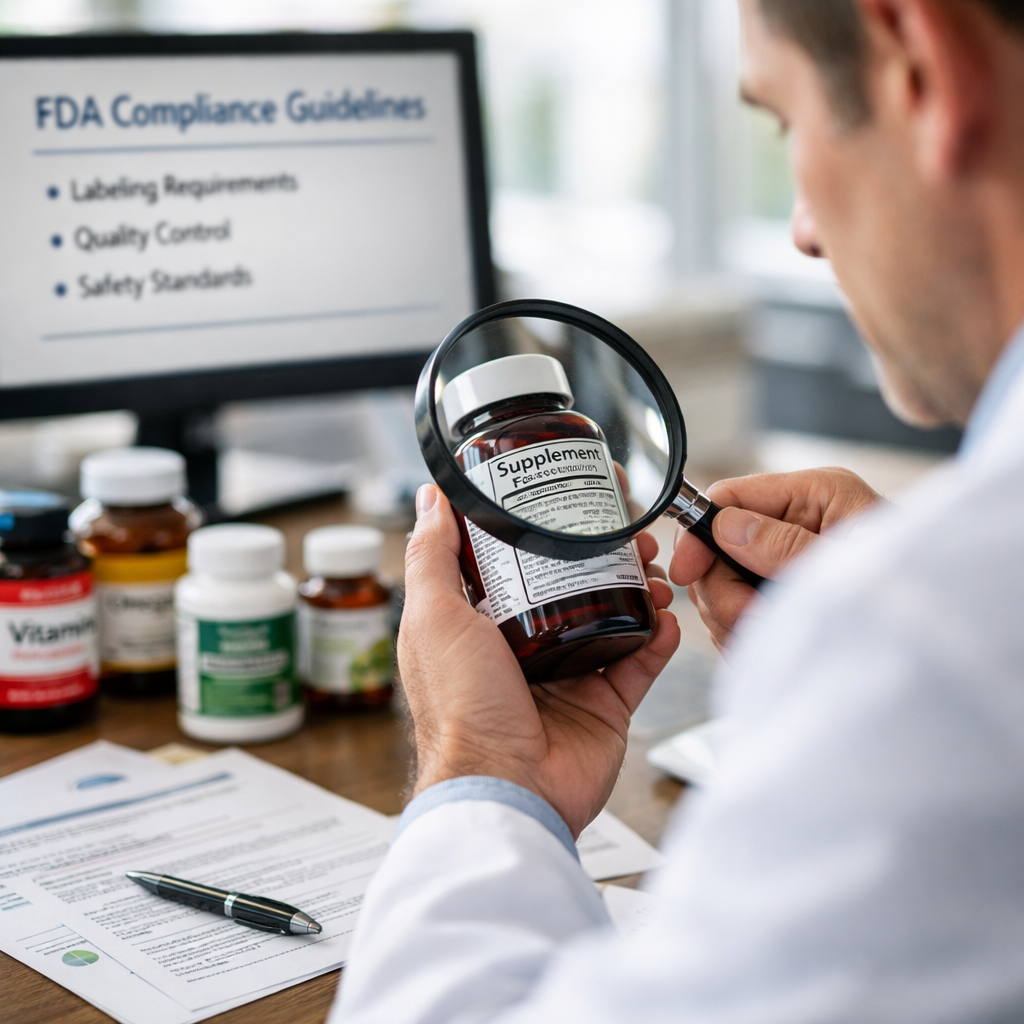
Understanding FDA Requirements for Supplement Labels
Before diving into label generators, manufacturers must understand what FDA regulations actually require. The foundation of compliance starts with knowing these essential elements.
Every dietary supplement label must include a clear statement of identity that tells consumers exactly what the product is—whether it’s “Magnesium Supplement” or “Vitamin C with Bioflavonoids.” This statement appears prominently on the principal display panel where consumers first see your product.
The net quantity of contents must be displayed in both U.S. customary units (ounces, pounds) and metric units (grams, milliliters), following specific placement and font size requirements based on package dimensions. This seemingly simple requirement trips up many first-time manufacturers who don’t realize the FDA has precise rules about where and how this information appears.
The Supplement Facts panel represents the heart of your label compliance. Unlike Nutrition Facts panels on conventional foods, Supplement Facts panels must list serving size, servings per container, and the amount of each dietary ingredient per serving. For vitamins and minerals with established Daily Values, you must show the percentage of Daily Value (%DV) each serving provides. For other dietary ingredients like amino acids or botanical extracts, you list the amount per serving without a %DV.
Here’s where it gets critical: you must disclose all ingredients in descending order of predominance by weight. This includes active ingredients in your Supplement Facts panel and other ingredients (like fillers, binders, and flavorings) in a separate “Other Ingredients” statement. Miss an ingredient, and you’ve created a misbranded product subject to FDA enforcement action.
Allergen information requires special attention. If your supplement contains any of the major food allergens—milk, eggs, fish, crustacean shellfish, tree nuts, peanuts, wheat, or soybeans—you must declare them clearly, either in the ingredient list or in a separate “Contains” statement immediately following it.
The structure/function disclaimer represents another non-negotiable requirement. When you make claims about how your supplement supports normal body functions—like “supports immune health” or “promotes healthy joints”—you must include the statement: “This statement has not been evaluated by the Food and Drug Administration. This product is not intended to diagnose, treat, cure, or prevent any disease.” This disclaimer protects both you and consumers by clearly distinguishing supplements from drugs.
Finally, you must include complete manufacturer information: the name and address of the manufacturer, packer, or distributor. This gives consumers and regulators a clear point of contact for questions or concerns.
What you cannot include are unapproved health claims. Unlike structure/function claims that describe normal body functions, health claims assert that a product reduces the risk of disease. Unless your claim has received FDA authorization (like “Calcium may reduce the risk of osteoporosis”), it’s prohibited and grounds for immediate regulatory action.
How Free Label Generators Streamline Draft Creation
Free nutrition label generators have emerged as practical tools that help manufacturers create compliant draft labels without investing thousands in specialized software or consultants upfront. These platforms understand FDA formatting requirements and generate labels that follow the basic regulatory structure.
OnlineLabels offers one of the most straightforward free nutrition label generators available. The platform provides exportable templates specifically designed for supplement facts panels, allowing you to input your product data and instantly generate a draft label in PDF format. The system automatically handles formatting details like font sizes, spacing requirements, and the distinctive bordered format that Supplement Facts panels require.
Packify AI takes a different approach by combining label generation with basic compliance checking. This platform allows you to create editable label templates that you can refine as your formulation develops. The AI-powered features help identify potential compliance issues, though manufacturers should always verify recommendations against current FDA regulations.
What makes these tools valuable isn’t their ability to guarantee compliance—no automated tool can replace thorough regulatory review—but rather their capacity to create professional-looking draft labels rapidly. Instead of spending hours in design software trying to format a Supplement Facts panel correctly, you can generate a compliant draft in minutes.
However, a critical warning applies: these generators work from the data you provide. If you input incorrect serving sizes, miscalculate %DV values, or forget to list an ingredient, the generator will create a label with those errors embedded. The old software principle “garbage in, garbage out” applies completely.
Think of free label generators as sophisticated drafting tools, not compliance guarantors. They help you create the structural framework of a compliant label, but the accuracy of the content—and ultimate compliance with FDA regulations—remains your responsibility.

Practical Workflow for Using Label Generators Effectively
Successfully using a free nutrition label generator requires a systematic workflow that ensures accuracy from the start. Here’s how forward-thinking manufacturers approach this process:
Step 1: Gather Complete Product Data
Before touching any label generator, compile all your product information in one document. This includes:
- Exact serving size (determined by your recommended use)
- Number of servings per container
- Complete ingredient list with precise amounts per serving
- Source information for botanical ingredients
- Allergen information
- Manufacturer details
At NutraAeon, we emphasize complete documentation from the supply chain. When you source premium ingredients like L-Theanine or Vitamin C Palmitate, your supplier should provide certificates of analysis showing exact purity levels. These documents become the foundation for accurate label claims.
Step 2: Select the Appropriate Template
Most free generators offer multiple template options. Choose the format that matches your product type—whether it’s a single-ingredient supplement like pure Glycine, a multi-vitamin complex, or a proprietary blend containing multiple amino acids.
The template selection matters more than many manufacturers realize. A simple vitamin C supplement requires a straightforward format, while a complex blend containing multiple B-vitamins, minerals like Magnesium Oxide, and amino acids needs a more detailed layout.
Step 3: Input Data with Precision
Enter your product information carefully, double-checking every value. Pay particular attention to:
- Units of measurement (mg vs. mcg vs. IU)
- Decimal placement
- Spelling of ingredient names (FDA uses specific nomenclature)
- Order of ingredients by predominance
This step deserves your full attention. A single misplaced decimal—listing 1000mg of Vitamin C when your product contains 100mg—creates a misbranded product that misrepresents your formulation to consumers.
Step 4: Review Against Regulatory Requirements
Once the generator produces your draft label, conduct a line-by-line review against FDA requirements. Verify that:
- The Supplement Facts heading appears prominently
- All required elements are present and correctly formatted
- Font sizes meet minimum requirements
- The structure/function disclaimer appears if needed
- Allergen information is clearly disclosed
Step 5: Generate Multiple Formats for Review
Export your draft label in multiple formats (PDF, PNG, editable formats) to facilitate internal review. Different stakeholders—quality assurance, regulatory affairs, marketing—can review the label in their preferred format before you move toward final production.
Best Practices for Manufacturers Using Free Generators
Implementing free label generators successfully requires following proven best practices that balance efficiency with compliance rigor.
Cross-Verify All Data Points
Never rely solely on the generator’s output. Create a verification checklist that confirms every data point against source documentation:
- Match amino acid amounts against your formulation records
- Verify vitamin concentrations against certificates of analysis
- Confirm %DV calculations using current Daily Value reference amounts
- Double-check that all excipients appear in the Other Ingredients list
At NutraAeon, our quality philosophy emphasizes verification at every stage. When we supply premium ingredients exceeding USP and FDA expectations, we provide complete documentation that makes this verification process straightforward.
Maintain Comprehensive Documentation
Keep detailed records of how you developed your label:
- Original formulation worksheets
- Certificates of analysis for all ingredients
- %DV calculation spreadsheets
- All draft versions with revision dates
- Notes on why specific labeling decisions were made
This documentation becomes invaluable during FDA inspections or if questions arise about your labeling. It demonstrates your commitment to compliance and provides a clear audit trail.
Consider Third-Party Verification
While free generators help create draft labels, consider having a regulatory consultant or third-party lab review your final label before printing thousands of units. This investment—typically a few hundred dollars—provides expert eyes that catch issues automated tools miss.
Third-party verification aligns with NutraAeon’s transparency philosophy. Complete supply chain visibility extends to label accuracy, ensuring that what you claim matches what your product delivers.
Plan for Regulatory Updates
FDA regulations evolve, and your labeling must keep pace. When you use a free generator, you’re responsible for staying current with regulatory changes. Subscribe to FDA updates, join industry associations, and budget for label revisions when regulations change.
For example, if FDA modifies Daily Value reference amounts (as happened with the 2016 Nutrition Facts Label changes), every affected product label requires updating. Free generators may not automatically reflect the newest regulations, so you must verify their templates remain current.
Avoid Template Overuse
Free generators work well for straightforward formulations, but complex products may require custom design. If your supplement contains a proprietary blend of multiple amino acids like L-Serine, L-Tryptophan, and Glycine, plus a full vitamin complex including Vitamin E tocopherols, the standard template might not adequately display all required information.
Know when to graduate from free tools to professional label design services that can create custom layouts while maintaining regulatory compliance.
Quick Takeaway: Balance Efficiency with Validation
Free nutrition label generators represent powerful tools for supplement manufacturers seeking to reduce compliance costs without sacrificing quality. They excel at creating properly formatted draft labels quickly, allowing you to visualize your product presentation and catch obvious errors before investing in final production.
However, these tools serve as starting points, not endpoints. The efficiency they provide in drafting must be balanced with rigorous validation against FDA requirements. Your responsibility as a manufacturer extends beyond generating a professional-looking label—it encompasses ensuring that every claim, every ingredient listing, and every disclosure accurately represents your product.
This balanced approach reflects NutraAeon’s core philosophy of quality, transparency, and empowerment. Just as we provide premium ingredients with complete documentation and supply chain visibility, successful label compliance requires combining efficient tools with thorough verification. The free generator creates your draft efficiently; your expertise and attention to detail ensure it meets regulatory standards.
For forward-thinking supplement manufacturers, particularly small businesses and R&D companies developing innovative formulations, free nutrition label generators offer a practical bridge between concept and compliant product. They reduce upfront costs while you validate your market, allowing you to invest resources in premium ingredients—like the high-purity amino acids and comprehensive vitamin offerings that differentiate your products in competitive markets.
Use these tools wisely: let them handle the formatting complexity while you focus on the accuracy and truthfulness that builds consumer trust and withstands regulatory scrutiny. In an industry where label compliance directly impacts consumer safety and business viability, this combination of efficient drafting and careful validation creates the foundation for sustainable success.