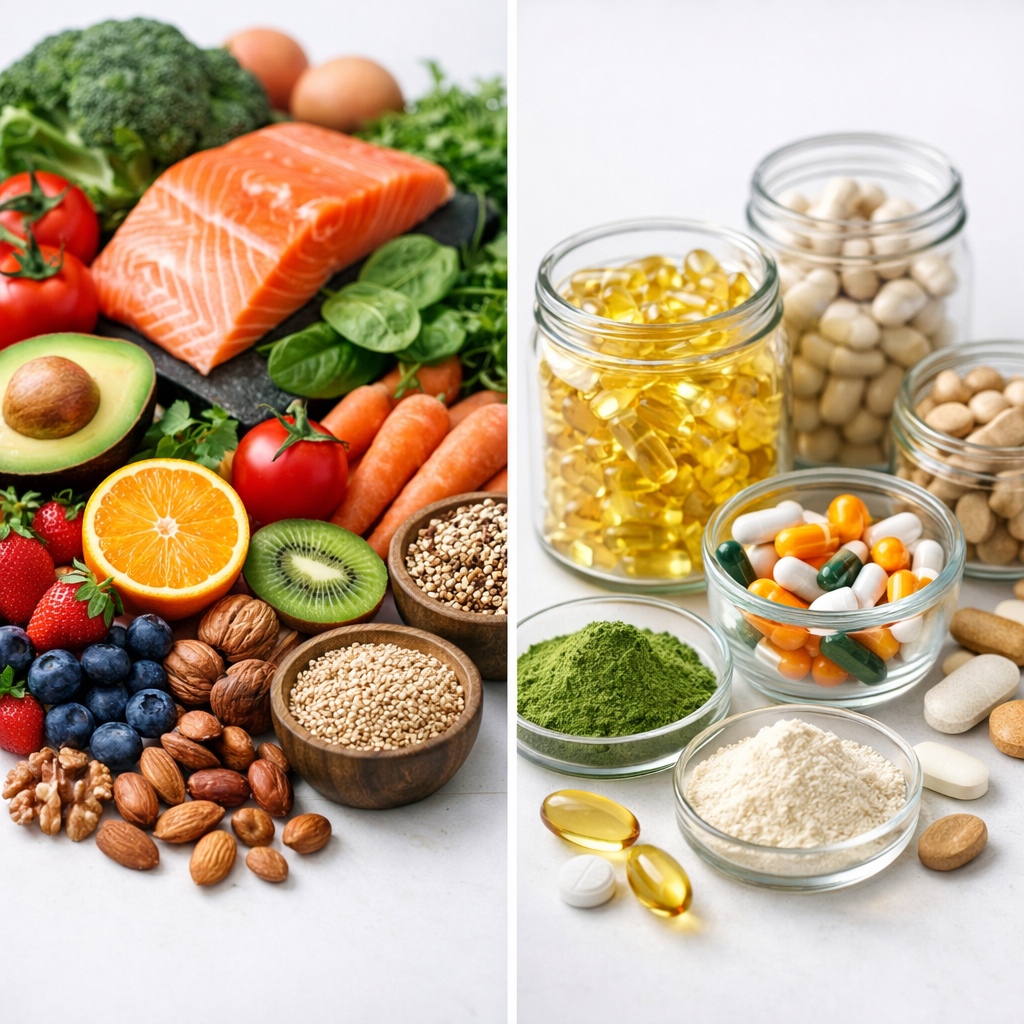
The dietary supplement industry stands at a critical juncture where regulatory precision determines market success. For manufacturers navigating ingredient sourcing decisions, understanding the dietary supplement definition isn’t merely an academic exercise—it’s the foundation upon which entire product lines are built or dismantled. As regulatory frameworks evolve across global markets, manufacturers face an increasingly complex landscape where a single misstep in ingredient selection can trigger costly recalls, legal challenges, or complete market withdrawal.
💭 Consider this: a manufacturer sources what appears to be a promising new botanical extract, only to discover months later that it requires pre-market notification under New Dietary Ingredient regulations. The result? Delayed product launches, wasted development resources, and potentially damaged relationships with retail partners. This scenario plays out more frequently than industry insiders care to admit, underscoring why a comprehensive understanding of dietary supplement definitions across jurisdictions isn’t optional—it’s essential for survival.
The manufacturers who thrive in today’s environment approach ingredient sourcing with a clear-eyed understanding of regulatory boundaries. They recognize that the dietary supplement definition shapes everything from formulation possibilities to marketing claims, from manufacturing protocols to international expansion strategies. This knowledge empowers informed decision-making, transforming regulatory compliance from a burden into a competitive advantage.

Understanding the United States Framework: DSHEA and Beyond
In the United States, the Dietary Supplement Health and Education Act of 1994 (DSHEA) fundamentally defines what constitutes a dietary supplement. Under this framework, a dietary supplement is a product intended to supplement the diet that contains one or more dietary ingredients—including vitamins, minerals, herbs or other botanicals, amino acids, or other substances used to supplement the diet by increasing total dietary intake.
This definition carries profound implications for manufacturers. A product must be labeled as a dietary supplement and intended for ingestion in forms such as tablets, capsules, powders, or liquids. It cannot be represented for use as a conventional food or as a sole item of a meal or diet. These distinctions matter enormously when sourcing ingredients, as they determine the entire regulatory pathway your product will follow.
The compliance requirements under DSHEA extend far beyond simple categorization. Labeling regulations demand precision and accuracy. Manufacturers must ensure their supplement facts panels accurately reflect ingredient quantities, avoid prohibited disease claims, and include required disclaimers. The now-flexible DSHEA disclaimer requirement—which FDA recently indicated need not appear on every panel of a product—demonstrates how regulatory interpretation evolves, requiring manufacturers to stay vigilant and informed.
Perhaps most critical for ingredient sourcing decisions is the New Dietary Ingredient (NDI) notification requirement. Any dietary ingredient that wasn’t marketed in the United States before October 15, 1994, generally requires pre-market notification to FDA at least 75 days before introduction. This seemingly straightforward rule creates substantial complexity in practice. Manufacturers must thoroughly research an ingredient’s market history, understand whether chemical alterations affect NDI status, and prepare comprehensive safety documentation when notifications are required.
⚠️ The NDI pathway has caught numerous manufacturers off-guard. A botanical extract processed using a novel extraction method, even if the plant itself was marketed before 1994, may constitute a new dietary ingredient requiring notification. Amino acids synthesized through different processes than those historically used can trigger NDI requirements. Forward-thinking manufacturers build NDI assessment into their ingredient evaluation process from day one, consulting with regulatory experts before commitments are made to suppliers.
Manufacturing Standards: The CGMP Imperative
Current Good Manufacturing Practices (CGMP) for dietary supplements, codified in 21 CFR Part 111, establish the baseline quality standards that every manufacturer must meet. These regulations ensure dietary supplements are consistently produced and controlled according to quality standards appropriate to their intended use and label specifications.
For ingredient sourcing, CGMP requirements translate into rigorous supplier qualification and verification processes. Manufacturers must establish and follow written procedures for quality control operations, including testing and examination of incoming ingredients. This means every ingredient shipment requires identity verification—confirming that what your supplier sent matches what you ordered. Purity testing ensures ingredients meet established specifications for contaminants, adulterants, and potency.
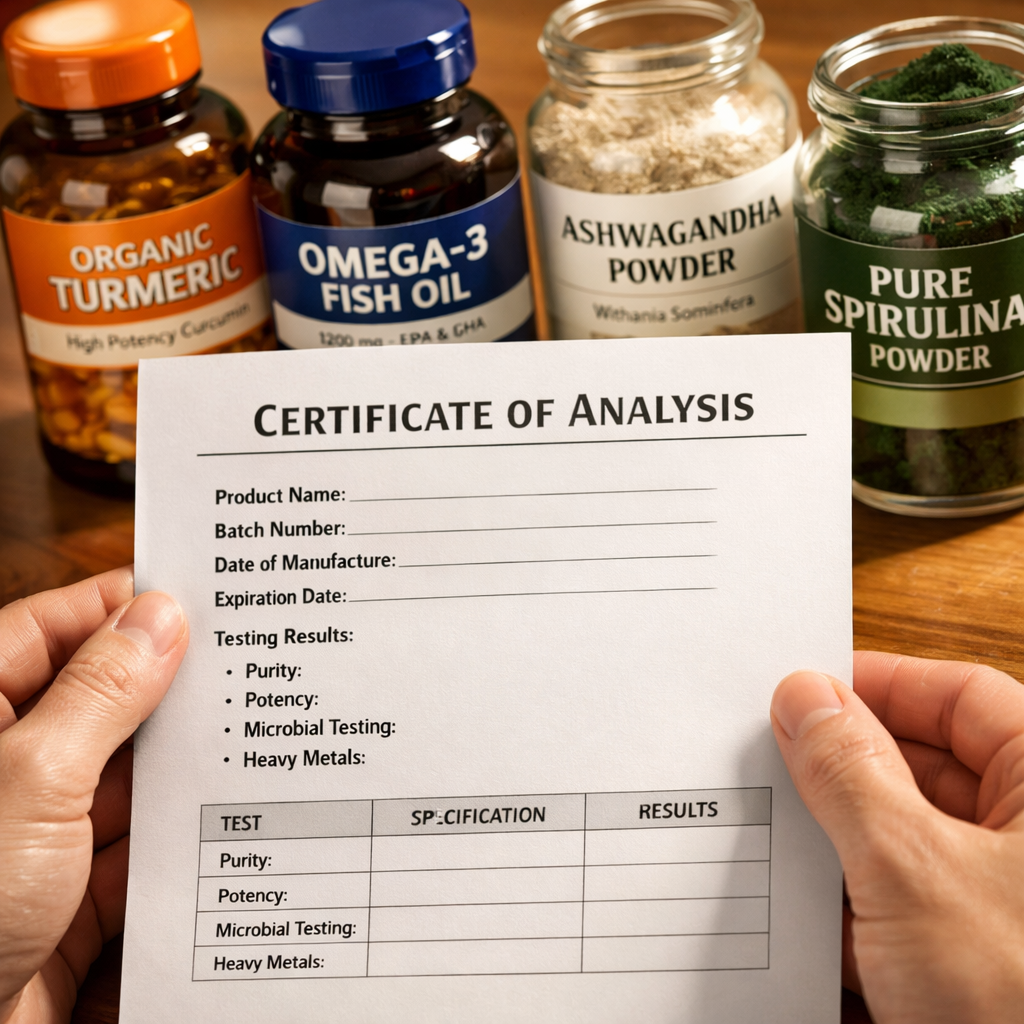
The Certificate of Analysis (COA) becomes an indispensable document in this framework. A comprehensive COA from a reputable supplier provides detailed analytical data confirming ingredient identity, purity, strength, and composition. However, CGMP regulations don’t permit manufacturers to simply accept supplier COAs at face value. Verification through identity testing—at minimum—must be conducted on incoming ingredients. For critical parameters or higher-risk ingredients, full specification testing may be warranted.
Documentation requirements under CGMP are exhaustive and deliberate. Manufacturers must maintain batch production records that trace ingredients from receipt through finished product release. This traceability serves multiple purposes: it enables rapid response to quality issues, supports root cause investigations when problems arise, and provides the evidentiary foundation for regulatory inspections.
The supplier approval process deserves particular attention. CGMP regulations require manufacturers to approve suppliers based on their ability to meet established specifications. This means conducting supplier audits, reviewing manufacturing processes, evaluating quality systems, and periodically reassessing supplier performance. A reputable ingredient partner will welcome this scrutiny, providing transparency into their operations and demonstrating their own commitment to quality.
Quality control extends beyond testing to encompass the entire manufacturing environment. Temperature controls, sanitation procedures, equipment calibration, personnel training—every element contributes to product integrity. When evaluating ingredient suppliers, manufacturers should assess whether suppliers maintain comparable quality systems, as upstream quality problems inevitably flow downstream into finished products.
European Union Regulatory Landscape: Harmonized Rules with Regional Nuances
The European Union approaches dietary supplements—termed “food supplements” in EU nomenclature—through a framework that balances harmonization with member state flexibility. Directive 2002/46/EC establishes the foundation, creating harmonized rules for vitamins and minerals while permitting member states to regulate other substances according to national provisions.
Under this directive, food supplements are defined as foodstuffs intended to supplement the normal diet, consisting of a concentrated source of nutrients or other substances with a nutritional or physiological effect. Like the US framework, products must be marketed in dose form—capsules, tablets, pills, and similar presentations—rather than as conventional foods.
The vitamin and mineral lists in Annexes I and II of Directive 2002/46/EC specify precisely which forms of these nutrients may be used in food supplements. This positive list approach differs fundamentally from the US framework, where ingredients are generally permitted unless specifically prohibited or requiring pre-market notification. In the EU, if a vitamin or mineral form isn’t on the authorized list, it cannot be used—period.
For manufacturers eyeing European markets, this creates both constraints and clarity. The constraints are obvious: formulation flexibility is limited to authorized substances. The clarity comes from knowing exactly what’s permitted, reducing uncertainty compared to navigating NDI determinations in the United States.
The European Food Safety Authority (EFSA) plays a pivotal role in safety assessments for food supplements. When manufacturers seek to add new vitamin or mineral forms to the authorized lists, EFSA conducts rigorous scientific evaluations. Recent authorizations, such as the monosodium salt of L-5-methyltetrahydrofolic acid as a folic acid source, demonstrate the pathway for expanding formulation possibilities—but also underscore the substantial evidence required.
For ingredients beyond vitamins and minerals—botanicals, amino acids, enzymes, and other substances—the regulatory landscape becomes more fragmented. While some harmonization exists, member states retain significant authority to regulate these ingredients according to national laws. A botanical ingredient perfectly legal in Germany might face restrictions in France. This fragmentation demands market-specific regulatory research before ingredient sourcing decisions are finalized.
The comparison between US and EU approaches reveals instructive contrasts. The US framework emphasizes post-market surveillance with manufacturers bearing responsibility for ensuring safety before marketing, while the EU leans toward pre-market authorization for specific ingredients. US manufacturers enjoy broader formulation flexibility but face greater uncertainty around novel ingredients. EU manufacturers work within tighter boundaries but benefit from clearer regulatory guidance.
Both systems share common ground in their emphasis on quality manufacturing, accurate labeling, and prohibition of disease claims. Both require substantial documentation and traceability. Both demand that manufacturers substantiate the safety of their products. These universal principles should guide ingredient sourcing regardless of target market.
Practical Takeaways for Forward-Thinking Manufacturers
Translating regulatory knowledge into operational excellence requires systematic approaches to compliance and supplier management. Forward-thinking manufacturers implement these strategies:
🎯 Establish a regulatory review protocol for ingredient sourcing. Before evaluating samples or negotiating contracts, conduct preliminary regulatory assessments. For US markets, research the ingredient’s pre-1994 market history. For EU markets, verify whether the ingredient appears on authorized lists or requires member state-specific approvals. This upfront investment prevents costly mistakes downstream.
✅ Develop comprehensive supplier qualification procedures. Create detailed questionnaires covering manufacturing processes, quality systems, testing protocols, and regulatory compliance. Request facility audit rights in supply agreements. Establish clear specifications for every ingredient parameter that affects finished product quality or compliance. Remember: your supplier’s practices become your responsibility under CGMP.
🔬 Implement robust verification testing programs. While supplier COAs provide valuable information, independent verification protects your interests. At minimum, conduct identity testing on all incoming ingredients. For critical ingredients or those with contamination risks, consider full specification testing. Partner with accredited third-party laboratories when internal testing capabilities are limited.
📁 Maintain meticulous documentation. Create systems that capture ingredient qualification decisions, testing results, batch traceability, and specification compliance. Digital quality management systems can streamline this documentation while ensuring accessibility during inspections. Remember: if it isn’t documented, it didn’t happen from a regulatory perspective.
📋 Build expertise in label claim substantiation. The intersection of ingredient properties and permissible claims demands careful navigation. Structure claims to reflect ingredient benefits supported by scientific evidence while avoiding prohibited disease claims. Understand the distinction between structure/function claims (permitted with required disclaimers) and disease claims (prohibited for supplements).
📡 Stay current with regulatory developments. Regulatory agencies continuously refine their positions through guidance documents, warning letters, and enforcement actions. Subscribe to FDA and EFSA updates. Participate in industry associations that track regulatory trends. The recent flexibility around DSHEA disclaimer placement demonstrates how requirements evolve—manufacturers must evolve with them.
🤝 Cultivate relationships with regulatory experts. Whether through in-house regulatory affairs specialists or external consultants, access to expertise pays dividends. Complex questions around NDI status, claim substantiation, or EU market access often require specialized knowledge that prevents expensive mistakes.
Clearing Up Common Misconceptions
Several persistent misconceptions about dietary supplements create confusion for manufacturers, particularly those new to the industry or expanding from conventional food production.
❌ Misconception: FDA approves dietary supplements before marketing. ✓ Reality: Unlike drugs, dietary supplements don’t require pre-market approval. FDA regulates supplements post-market, relying on manufacturers to ensure safety and compliance before introduction. This creates greater manufacturer responsibility, not less.
❌ Misconception: All ingredients marketed before October 1994 are exempt from NDI notification. ✓ Reality: The NDI analysis is more nuanced. Chemical alterations, new extraction processes, or different delivery forms can transform a grandfathered ingredient into an NDI. The form and manufacturing process matter as much as the base ingredient.
❌ Misconception: CGMP compliance is optional for small manufacturers. ✓ Reality: CGMP requirements apply to all dietary supplement manufacturers regardless of size, though implementation timelines were phased. Small operations face the same fundamental quality control obligations as large manufacturers.
❌ Misconception: Natural ingredients are inherently safe and require less testing. ✓ Reality: Natural sources can harbor contaminants, vary in potency, and interact with medications. “Natural” provides no regulatory exemption from safety obligations or quality testing requirements.
❌ Misconception: Meeting CGMP means products are FDA-approved. ✓ Reality: CGMP compliance demonstrates adherence to manufacturing quality standards. It doesn’t constitute product approval or guarantee that ingredients are appropriate for use in supplements.
Understanding these nuances prevents the costly assumption that regulatory pathways are simpler than they actually are. The manufacturers who succeed approach compliance with healthy respect for its complexity, investing in knowledge and systems that ensure long-term adherence.
Building Excellence Through Partnership and Principle
The complexity of dietary supplement regulations across global markets demands more than mere compliance—it requires a philosophical commitment to quality, transparency, and empowerment that permeates every business decision.
✨ Quality begins with ingredient selection. When manufacturers partner with suppliers who share their commitment to excellence, who implement rigorous testing protocols exceeding minimum requirements, who view documentation as a tool for continuous improvement rather than a burden, quality becomes embedded in the supply chain. This is why industry-leading testing protocols and certificates of analysis from suppliers matter enormously—they represent a supplier’s commitment to the same principles that drive successful manufacturers.
🔍 Transparency transforms supplier relationships from transactional exchanges into strategic partnerships. Complete visibility into sourcing, manufacturing processes, testing results, and compliance documentation enables informed decision-making. When challenges arise—and they inevitably do—transparent communication facilitates rapid problem-solving rather than finger-pointing.
💡 Empowerment through knowledge stands as perhaps the most critical element. Manufacturers who understand regulatory frameworks can advocate for their products, navigate inspections confidently, and formulate strategically. Access to technical expertise, regulatory guidance, and innovative ingredient solutions empowers manufacturers to create products that genuinely stand out in competitive markets.
For companies like NutraAeon, these principles shape every interaction with manufacturing partners. By specializing in premium nutritional ingredients—from high-purity amino acids like L-Theanine for stress relief and L-Tryptophan for sleep support, to comprehensive vitamin offerings including multiple forms of Vitamin C and complete B-Complex families, to essential mineral compounds like food-grade Magnesium Oxide—the commitment to quality becomes tangible. Each ingredient arrives with complete documentation, rigorous testing confirmation, and full supply chain visibility from source to delivery.
This approach recognizes that ingredient sourcing isn’t simply about finding the lowest price or fastest delivery. It’s about building formulations that meet demanding quality standards, satisfy increasingly sophisticated consumers, and withstand regulatory scrutiny across multiple markets. It’s about creating products that manufacturers can stand behind with confidence.
The dietary supplement definition, properly understood, becomes more than a regulatory technicality. It’s the foundation for strategic decisions that determine product viability, market access, and brand reputation. Manufacturers who invest in understanding these definitions, who implement robust quality systems, who partner with suppliers committed to shared principles, position themselves for sustainable success in an industry where regulatory precision and ingredient excellence are inseparable.
As you evaluate ingredient sources for your next formulation, ask not only whether an ingredient meets specifications, but whether your supplier embodies the principles of quality, transparency, and empowerment that define industry leadership. The answer to that question will shape your product’s success far more than any single ingredient choice.