When you source ingredients for your supplement formulations, you’re not just purchasing raw materials—you’re entering into partnerships that directly impact your product quality, regulatory compliance, and brand reputation. The nutraceutical international corporation landscape has evolved dramatically, with industry leaders establishing rigorous standards that separate exceptional partnerships from mediocre ones. Understanding these standards isn’t optional anymore; it’s the foundation of sustainable business growth in the supplement industry.
The difference between a thriving supplement brand and one struggling with recalls, quality inconsistencies, or regulatory warnings often comes down to one critical factor: the strength and structure of their ingredient partnerships. Forward-thinking manufacturers recognize that robust partnership standards create a competitive advantage that extends far beyond cost savings.
The Regulatory Foundation: Building on Solid Ground
Every successful ingredient partnership begins with a clear understanding of the regulatory landscape. The FDA’s Current Good Manufacturing Practice (cGMP) regulations for dietary supplements establish baseline requirements that your suppliers must meet without exception. These regulations cover everything from ingredient identity verification to contamination prevention, creating a framework that protects both manufacturers and consumers.
Beyond FDA requirements, international standards like ISO 9001 provide quality management systems that ensure consistency across global operations. When your ingredient supplier maintains ISO 9001 certification, you’re partnering with an organization committed to continuous improvement, systematic problem-solving, and documented processes. This certification signals that quality isn’t an afterthought—it’s embedded in every operational decision.
The European Union’s Novel Food Regulation and Health Canada’s Natural Health Products Regulations add additional layers of compliance for manufacturers serving international markets. Your ingredient partners should demonstrate fluency with these varied regulatory frameworks, adapting their documentation and testing protocols to meet jurisdiction-specific requirements.
Consider a nutritional product developer preparing to launch a cognitive health supplement containing L-Theanine. Without a supplier who understands both FDA identity standards and EU novel food regulations, that developer faces potential market access barriers, delayed launches, and expensive reformulation costs. The right partnership transforms regulatory complexity into competitive advantage.

Partner Selection: Beyond Price and Availability
The traditional approach to ingredient sourcing—finding the lowest-cost supplier who claims to meet specifications—has proven disastrous for countless supplement manufacturers. Modern partnership standards demand a more sophisticated evaluation process that examines financial stability, technical competence, and quality culture.
Financial due diligence protects you from supply chain disruptions. A supplier facing bankruptcy or liquidity challenges may cut corners on testing, substitute inferior raw materials, or suddenly cease operations mid-production cycle. Request audited financial statements, verify credit ratings, and assess their customer diversity. A supplier overly dependent on a single client or market segment carries elevated risk.
Technical competence separates ingredient distributors from true partners. Does your potential supplier employ food scientists, quality assurance professionals, and regulatory specialists? Can they provide technical data sheets that go beyond basic specifications to include stability studies, bioavailability data, and formulation recommendations? The most valuable partnerships provide scientific expertise that enhances your product development process.
Site audits reveal what documentation cannot. When you visit a supplier’s facility—or hire qualified third-party auditors—you observe their quality culture firsthand. Are storage areas climate-controlled and organized? Do employees follow documented procedures? How do they handle non-conforming materials? These observations expose gaps between stated policies and actual practices.
One small business developing a stress-relief formula discovered during a site audit that their proposed supplier stored hygroscopic ingredients in a non-climate-controlled warehouse. Despite acceptable COAs on paper, the moisture exposure degraded ingredient potency between testing and shipping. That audit prevented thousands of dollars in wasted formulation work and potential product failures.
Certificates of Analysis: Your Quality Assurance Cornerstone
A Certificate of Analysis (COA) serves as the passport for every ingredient lot entering your facility. These documents verify that the specific batch meets your agreed-upon specifications for identity, purity, potency, and contaminants. However, not all COAs provide equal assurance.
Comprehensive COAs include multiple identity tests—not just a single method. For amino acids like L-Serine or Glycine, expect both chromatographic identity confirmation and melting point analysis. For vitamins, look for both chemical assays and functional bioactivity testing when relevant. Single-method testing creates vulnerability to sophisticated adulteration schemes.
Microbial testing should cover total plate count, yeast and mold, coliforms, E. coli, Salmonella, and Staphylococcus aureus. Heavy metal testing must include lead, cadmium, mercury, and arsenic at minimum. Pesticide screening becomes critical for botanical-derived ingredients, while allergen statements protect consumers with sensitivities.
The testing laboratory’s credentials matter enormously. ISO 17025 accreditation ensures that the lab maintains validated methods, calibrated equipment, trained personnel, and documented quality systems. COAs from non-accredited labs carry significantly less weight during regulatory inspections or customer audits.
Smart manufacturers verify COAs through occasional third-party testing. This practice, called “skip lot testing” or “confirmation testing,” detects fraudulent documentation and keeps suppliers honest. When suppliers know you verify their claims, quality standards naturally rise.
Enterprise businesses requiring strategic ingredient partnerships should establish clear COA review protocols. Define which team members review COAs, what triggers rejection decisions, and how you document acceptance. This systematic approach prevents inconsistent quality gates and creates audit trails that satisfy regulatory requirements.
Quality Agreements: Defining Expectations and Responsibilities
Verbal understandings and email exchanges don’t protect your interests when quality issues arise. Quality agreements formalize the relationship between manufacturers and suppliers, establishing clear responsibilities for testing, documentation, change notifications, and complaint handling.
Effective quality agreements specify exactly which tests the supplier performs versus which tests you conduct upon receipt. They define sampling procedures, reference methods, acceptance criteria, and retention sample requirements. When both parties understand their testing responsibilities, you eliminate gaps and redundancies.
Change notification protocols prevent surprises that compromise your formulations. Your quality agreement should require advance written notice for any changes to raw material sources, manufacturing processes, testing methods, or facility locations. Many formulation failures trace back to undisclosed supplier changes that altered ingredient characteristics.
The agreement must address non-conforming material procedures. How quickly will the supplier investigate quality complaints? What documentation will they provide? Who bears the cost of retesting or replacement? Clear answers prevent disputes and ensure rapid resolution when issues occur.
For contract manufacturing relationships, quality agreements become even more critical. They define ownership of master formulas, control of raw material specifications, responsibility for stability testing, and authority for specification changes. These agreements protect intellectual property while ensuring manufacturing consistency.
Supply Chain Governance: Managing Risk in Complex Networks
Modern nutraceutical supply chains span continents, involving raw material producers, processors, distributors, and contract manufacturers. This complexity demands governance structures that maintain visibility and control across multiple organizational boundaries.
Supplier tiering creates risk-proportional oversight. Your highest-risk ingredients—those with complex processing, expensive testing requirements, or limited supplier options—deserve Category A classification with quarterly reviews, annual audits, and extensive documentation. Lower-risk commodities receive proportionally lighter oversight while maintaining baseline standards.
Approved supplier lists formalize your qualification process and prevent unauthorized purchasing. Every supplier on this list has completed your vetting process, demonstrated compliance with your standards, and maintains current documentation. Purchasing departments should face absolute prohibition against sourcing from unapproved suppliers, regardless of price advantages or delivery promises.
Supply chain mapping extends beyond your direct suppliers to their suppliers. Understanding the full chain from raw material source to your receiving dock identifies hidden vulnerabilities. A vitamin supplier purchasing from a single API manufacturer creates concentration risk. An amino acid distributor sourcing from regions with inadequate regulatory oversight raises quality concerns.
Business continuity planning acknowledges that disruptions will occur. Regulatory changes, natural disasters, geopolitical events, or supplier failures can interrupt your ingredient supply. Qualified backup suppliers, safety stock strategies, and alternative formulation options protect your production schedules and customer commitments.
Nutritional product developers benefit enormously from transparent supply chain governance. When you understand your ingredient sources completely, you can make informed decisions about quality positioning, cost management, and risk tolerance. This knowledge transforms supply chain management from reactive firefighting to proactive strategy.
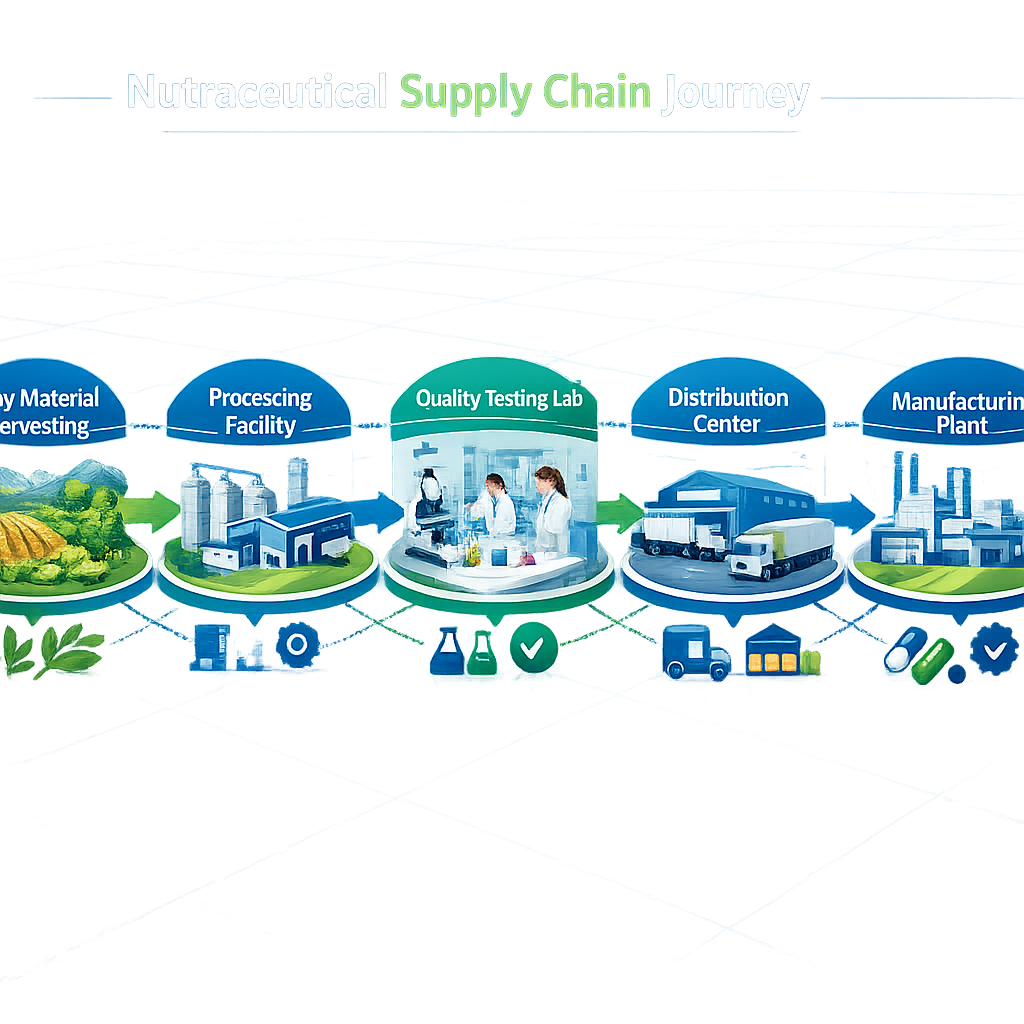
International Considerations: Navigating Global Compliance
Expanding beyond domestic markets multiplies regulatory complexity. Each jurisdiction maintains unique requirements for ingredient approval, labeling, health claims, and quality documentation. Your ingredient partnerships must accommodate this diversity without compromising efficiency.
The European Union’s stringent novel food regulations require pre-market authorization for ingredients without significant EU consumption history prior to 1997. Your supplier should understand which ingredients trigger novel food assessment and maintain documentation supporting traditional use or authorized status. Without this expertise, you face unexpected delays and market access barriers.
China’s blue-hat registration system for health foods creates another layer of ingredient scrutiny. Suppliers serving the Chinese market should maintain registration documentation, manufacturing practice certifications, and relationships with local regulatory experts. Health-conscious product manufacturers targeting Asian markets need partners who navigate these requirements routinely.
Halal and Kosher certifications address religious dietary requirements across global Muslim and Jewish communities. These certifications require ingredient traceability, dedicated production lines, and regular rabbinical or halal authority audits. Suppliers with established certification programs enable you to serve these valuable market segments without developing separate supply chains.
Export documentation competency matters when you source internationally. Your supplier should provide certificates of origin, free sale certificates, health certificates, and phytosanitary documentation as needed. They should understand Harmonized System codes, duty implications, and customs procedures that affect your landed costs and delivery timelines.
Implementation Roadmap: From Theory to Practice
Understanding partnership standards means little without systematic implementation. Leading manufacturers follow structured processes that transform these principles into daily operations and continuous improvement.
Begin with supplier qualification that examines capabilities before placing orders. Request quality management system certifications, customer references, technical capabilities documentation, and regulatory compliance records. Conduct preliminary audits for strategically important suppliers. This upfront investment prevents costly mistakes and relationship failures.
Establish clear specifications that go beyond ingredient identity to include purity levels, particle size ranges, bulk density parameters, and packaging requirements. Work collaboratively with suppliers to develop specifications that balance your needs with achievable manufacturing capabilities. Unrealistic specifications create unnecessary rejections and relationship friction.
Create receiving inspection protocols proportional to ingredient risk and supplier history. High-risk ingredients from new suppliers warrant comprehensive testing including identity, purity, and contaminant screens. Established suppliers with excellent track records may qualify for reduced testing—but never eliminate verification entirely.
Document everything systematically. Maintain files for each supplier including qualification records, quality agreements, COAs, correspondence, audit reports, and performance metrics. This documentation satisfies regulatory requirements while creating institutional knowledge that survives employee turnover.
Schedule regular performance reviews examining quality metrics, delivery reliability, technical support responsiveness, and regulatory compliance maintenance. These reviews identify improvement opportunities, recognize excellent performance, and flag concerning trends before they become crises. Forward-thinking supplement manufacturers treat these reviews as partnership development opportunities rather than supplier report cards.
Conclusion: Standards as Strategic Advantage
The nutraceutical international corporation standards we’ve explored transform ingredient partnerships from transactional relationships into strategic advantages. When you demand comprehensive COAs, conduct thorough supplier due diligence, establish clear quality agreements, and maintain supply chain visibility, you’re not just checking compliance boxes—you’re building a foundation for sustainable competitive advantage.
Quality emerges from systematic processes, not lucky breaks. Suppliers who maintain ISO certifications, employ qualified personnel, and invest in testing infrastructure deliver consistent excellence that protects your brand reputation.
Transparency throughout the supply chain—from raw material sources to finished ingredient delivery—empowers informed decision-making. You can’t manage risks you don’t understand or optimize processes you can’t see.
Empowerment comes from partnerships where suppliers contribute scientific expertise, regulatory knowledge, and technical support beyond simply fulfilling purchase orders. These relationships accelerate your product development, expand your market access, and enhance your formulation capabilities.
Small businesses and R&D companies benefit as much as enterprise operations from these partnership standards. Your limited resources make quality failures even more devastating, creating urgency around getting supplier relationships right from the start.
The supplement industry continues evolving toward higher standards, greater transparency, and more sophisticated quality systems. Manufacturers who embrace nutraceutical international corporation standards position themselves for long-term success in increasingly competitive and regulated markets. Your ingredient partnerships either amplify your capabilities or limit your potential—the choice lies in the standards you demand and the relationships you cultivate.