In the rapidly evolving landscape of nutritional science and supplement manufacturing, precision isn’t just a preference—it’s a necessity. For forward-thinking supplement manufacturers and nutritional product developers, understanding the exact energy content of formulations serves as the foundation for creating products that genuinely support consumer health goals. A Recipe Calorie Calculator represents more than a computational tool; it embodies the commitment to accuracy that separates exceptional products from merely adequate ones. When manufacturers prioritize precision in nutritional formulations, they empower consumers with reliable information that enables informed dietary decisions and fosters lasting trust in their brands.
Understanding the Recipe Calorie Calculator Framework
At its core, a Recipe Calorie Calculator translates ingredient quantities into metabolizable energy values using a scientifically established method. This process relies primarily on Atwater factors—conversion values developed by chemist William O. Atwater in the early 20th century. The system assigns specific caloric values to macronutrients based on their energy contribution: proteins and carbohydrates provide approximately 4 calories per gram, fats deliver 9 calories per gram, and alcohol contributes 7 calories per gram when present.
The distinction between general and specific Atwater factors carries significant practical implications for manufacturers. General factors offer simplicity and standardization across food categories, making them suitable for broad nutritional estimations and regulatory compliance. However, specific Atwater factors—tailored to particular food types—account for variations in digestibility and absorption efficiency. For instance, the protein in eggs has different bioavailability than the protein in legumes, affecting the actual energy the body can extract. Enterprise businesses requiring strategic ingredient partnerships particularly benefit from understanding these nuances, as they directly impact formulation accuracy and product efficacy claims.
The choice between general and specific factors depends on the precision requirements of your application. Supplement manufacturers developing specialized formulations for health-conscious consumers often opt for specific factors to maximize accuracy, while those creating general wellness products may find general factors sufficiently reliable for regulatory labeling purposes.
The Seven-Step Calculation Workflow
Achieving accurate caloric estimations requires a methodical approach that addresses each component of the recipe systematically. The calculation workflow unfolds through seven interconnected steps, each building upon the previous to deliver comprehensive nutritional data.

Step 1: Complete Ingredient Listing
Begin by documenting every ingredient with precise measurements. This foundational step demands attention to detail—even minor components like oils used for coating or powders for dusting must be recorded. Small businesses and R&D companies conducting initial formulation trials should establish standardized measurement protocols early, ensuring consistency across batches.
Step 2: Determining Edible Portions
Yield factors adjust raw ingredient weights to reflect actual edible portions after preparation. When vegetables are trimmed or meats are cooked, the usable weight changes significantly. A raw chicken breast weighing 200 grams might yield only 150 grams of cooked meat due to moisture loss. These adjustments prevent overestimation of nutritional content and ensure labeling accuracy.
Step 3: Obtaining Macronutrient Data
Access reliable databases like USDA FoodData Central to retrieve macronutrient profiles for each ingredient. This database provides detailed breakdowns of protein, fat, carbohydrate, fiber, and alcohol content based on individually researched samples. Nutritional product developers should verify that ingredient entries match their specific sourcing—wild-caught salmon differs nutritionally from farm-raised varieties, for example.
Step 4: Converting to Calories with Atwater Factors
Apply the appropriate Atwater factors to each macronutrient. Multiply grams of protein by 4, carbohydrates by 4, fats by 9, and alcohol by 7. Some contexts treat dietary fiber at 2 calories per gram, recognizing its limited digestibility. The formula becomes: Total Calories = (Protein × 4) + (Carbs × 4) + (Fat × 9) + (Alcohol × 7).
Step 5: Summing Total Recipe Calories
Aggregate caloric contributions from all ingredients to calculate the total energy content of the complete recipe or formulation. This sum represents the baseline from which all subsequent calculations derive.
Step 6: Dividing for Per-Serving Amounts
Determine the number of servings your recipe yields and divide total calories accordingly. Serving size definition significantly impacts consumer perception and product positioning. Health-conscious product manufacturers must balance realistic portion sizes with competitive market expectations.
Step 7: Adjusting for Cooking Effects
Cooking methods alter caloric density through moisture loss or fat absorption. Roasting concentrates calories by removing water, while deep-frying adds significant energy from absorbed oil. These adjustments, though sometimes overlooked, can shift final values by 10-20% or more, materially affecting labeling accuracy and consumer trust.
Data Sources and Inherent Limitations
The reliability of calorie calculations depends entirely on the quality of underlying data sources. USDA FoodData Central stands as the gold standard for nutritional information in the United States, providing comprehensive nutrient profiles derived from laboratory analysis of representative food samples. The database continuously updates as new research emerges, incorporating advances in analytical methods and expanding coverage of contemporary ingredients.
FDA guidelines establish regulatory frameworks for nutrition labeling, specifying rounding rules, compliance tolerances, and mandatory disclosure thresholds. Current law permits up to 20% deviation between labeled and actual nutritional content—a tolerance that underscores the approximative nature of these calculations even under rigorous conditions.
Several limitations require acknowledgment. First, natural variation in ingredient composition means no two apples, chicken breasts, or wheat crops possess identical nutritional profiles. Growing conditions, animal feed, harvesting timing, and storage duration all introduce variability. Second, database entries represent averages that may not precisely match your specific ingredient sources. A supplement manufacturer sourcing organic ingredients from a particular geographic region might experience systematic differences from database averages compiled from conventional products across diverse locations.
Third, the human digestive system’s efficiency varies individually based on gut microbiome composition, metabolic health, and concurrent dietary factors. The 4-9-4 Atwater system estimates average digestibility but cannot account for person-to-person differences in nutrient absorption. Finally, food synergies and antinutrient effects—how ingredients interact to enhance or inhibit nutrient bioavailability—remain difficult to model in simplified calorie calculations.
Real-World Applications Across Industries
Precise calorie calculations extend far beyond regulatory compliance, enabling practical applications that enhance operational efficiency and consumer outcomes. In menu planning for healthcare facilities, schools, and corporate dining programs, accurate energy estimations ensure nutritional targets align with population needs. A hospital managing therapeutic diets for diabetic patients requires exact caloric control to maintain blood glucose stability—even small calculation errors compound across multiple meals daily.
Educational contexts benefit significantly from transparent nutritional calculations. Nutrition science programs, culinary schools, and public health initiatives use these tools to teach fundamental principles of dietary composition. When students understand how recipe modifications affect energy content, they develop intuitive appreciation for nutritional balance that transcends simple memorization.
Dietary tracking applications have democratized nutrition monitoring, empowering millions of consumers to manage their health through informed food choices. The accuracy of these platforms depends critically on reliable calorie data. Enterprise businesses requiring strategic ingredient partnerships recognize that supplying precise nutritional information for their ingredients enables these downstream applications, expanding market reach and building brand credibility.
Regulatory compliance represents perhaps the most consequential application. FDA mandates that packaged food labels display accurate nutritional information within specified tolerances. Systematic errors in calorie calculation expose manufacturers to regulatory sanctions, product recalls, and reputational damage. The proposed 2025 FDA rule requiring front-of-package nutrition labels intensifies scrutiny on labeling accuracy, making precision calculations even more critical for market access.
Consumer trust forms the intangible yet invaluable outcome of nutritional transparency. When consumers consistently find that products deliver the nutritional profile promised on labels, they develop brand loyalty and willingness to pay premium prices. Conversely, even unintentional labeling inaccuracies discovered through independent testing can trigger social media backlash and lasting brand damage in today’s information-rich environment.
The NutraAeon Advantage in Nutritional Precision
At NutraAeon, our philosophy of quality, transparency, and empowerment directly addresses the challenges inherent in achieving nutritional precision. As a global nutritional ingredients partner, we recognize that accurate formulation begins with exceptional raw materials characterized by consistent composition and comprehensive documentation.
Our quality commitment manifests through industry-leading testing protocols that exceed USP and FDA expectations. Every ingredient batch undergoes rigorous analysis to verify macronutrient profiles, ensuring the values you use in calculations reflect your actual formulation components rather than database averages. This specificity reduces the uncertainty gap between theoretical and realized nutritional content, enabling more confident labeling and more effective products.
Transparency extends throughout our supply chain from source to delivery. Complete documentation and certificates of analysis provide the detailed compositional data that sophisticated manufacturers need for precise calculations. When you understand not just what percentage protein an amino acid powder contains, but also its specific form, particle size distribution, and manufacturing process, you can make informed decisions about how it will perform in your formulation and how to accurately represent its nutritional contribution.
Our empowerment principle recognizes that technical expertise and regulatory guidance complement premium ingredients. NutraAeon’s team assists partners in navigating the complexities of nutritional calculations, helping translate ingredient specifications into accurate energy estimations and compliant label claims. For nutritional product developers working with novel ingredients or proprietary blends, this support proves invaluable in avoiding costly formulation errors and regulatory complications.
Consider our Amino Acid Series as a practical example. L-Theanine for stress relief, L-Tryptophan for sleep quality, L-Serine for cognitive support, and Glycine for sports nutrition each possess distinct molecular weights and nitrogen contents affecting their caloric contributions. While amino acids primarily function for their biological activities rather than energy provision, precise accounting of their minimal caloric impact ensures comprehensive nutritional disclosure. Our detailed specifications enable manufacturers to incorporate these values accurately into total formulation calculations.
Similarly, our Vitamin Series—including multiple forms of Vitamin C, Vitamin C Palmitate, Vitamin E tocopherols, and complete B-Complex family—requires careful consideration when fat-soluble vitamins are formulated with carrier oils. The fat content of these carriers contributes significantly to total calories, yet may be overlooked in simplified calculations. Our transparent documentation of all excipients and carriers empowers manufacturers to account for every caloric contributor.
Our Mineral Series, featuring premium mineral compounds like food-grade Magnesium Oxide, typically contributes negligibly to energy content but may be formulated with binders or coating materials that do provide calories. Comprehensive certificates of analysis detail these minor components, supporting complete nutritional accounting.
Building Better Health Outcomes Through Precision
The cumulative impact of precision in nutritional formulation extends beyond regulatory compliance to fundamentally improve health outcomes. When consumers can trust that a supplement or functional food delivers exactly the nutritional profile advertised, they can effectively integrate it into comprehensive wellness strategies. A protein powder accurately labeled at 120 calories per serving enables precise daily intake planning, while one systematically understated at 100 calories despite containing 130 frustrates fitness goals and erodes confidence in supplement efficacy.
For forward-thinking supplement manufacturers, this precision becomes a competitive differentiator. As consumers grow increasingly sophisticated in evaluating nutritional claims, products backed by rigorous formulation science and transparent disclosure stand out in crowded markets. The 2025 Dietary Guidelines’ emphasis on “eat real food” and limiting added sugars reflects growing public demand for nutritional honesty—demand that positions precision-focused manufacturers favorably.
Health-conscious product manufacturers also benefit from precision through improved product development cycles. Accurate baseline nutritional data enables meaningful reformulation efforts to optimize macronutrient ratios, reduce empty calories, or enhance nutrient density. Each iteration’s effects can be quantified objectively, accelerating the path from concept to successful market offering.
Practical Calculation Example
To illustrate these principles concretely, consider a simple protein smoothie formulation:
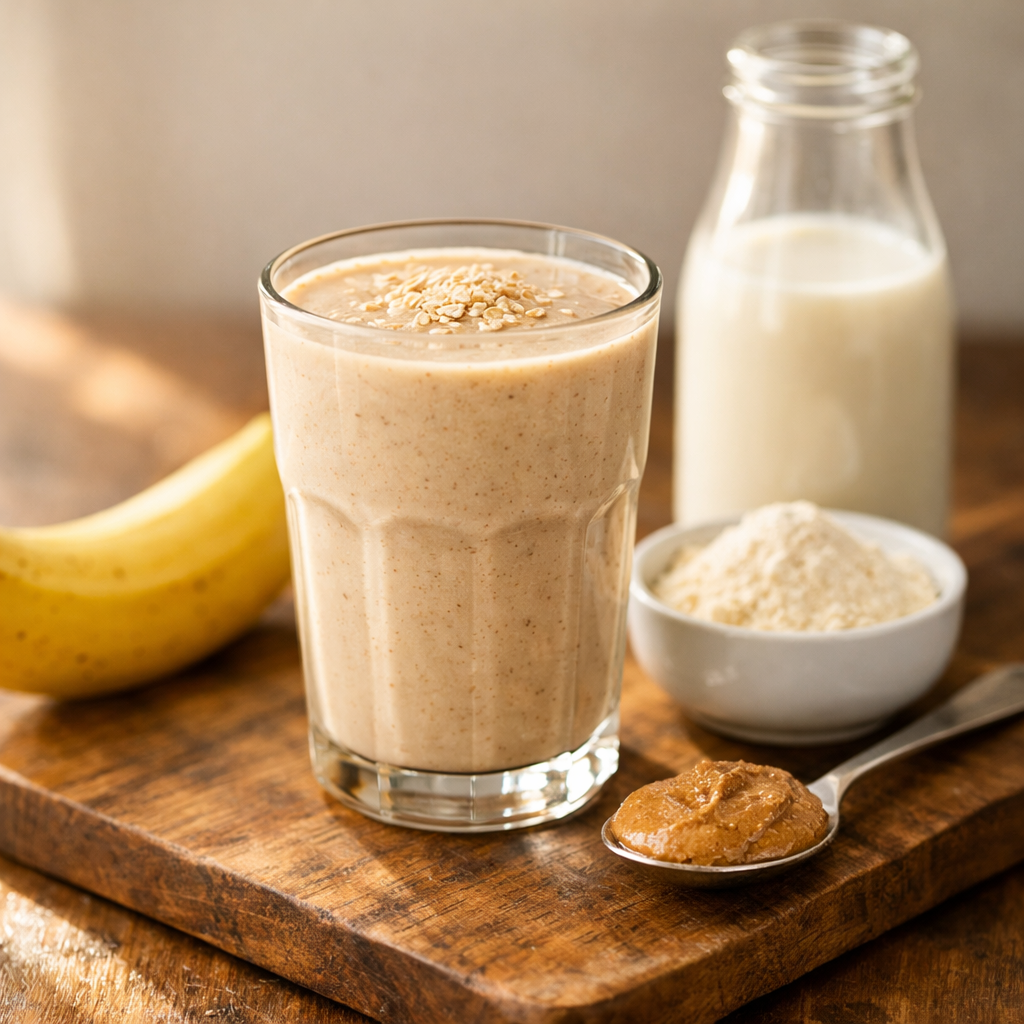
Ingredients:
- 30g whey protein isolate (90% protein, 3% fat, 2% carbs)
- 200ml almond milk (2g protein, 3g fat, 2g carbs per 200ml)
- 100g banana (1.1g protein, 0.3g fat, 23g carbs)
- 10g almond butter (2.4g protein, 5.5g fat, 1.9g carbs)
Calculation:
Whey protein: (27g protein × 4) + (0.9g fat × 9) + (0.6g carbs × 4) = 108 + 8.1 + 2.4 = 118.5 kcal
Almond milk: (2g × 4) + (3g × 9) + (2g × 4) = 8 + 27 + 8 = 43 kcal
Banana: (1.1g × 4) + (0.3g × 9) + (23g × 4) = 4.4 + 2.7 + 92 = 99.1 kcal
Almond butter: (2.4g × 4) + (5.5g × 9) + (1.9g × 4) = 9.6 + 49.5 + 7.6 = 66.7 kcal
Total: 327.3 kcal (typically rounded to 325 or 330 for labeling)
This straightforward example demonstrates how meticulous ingredient-level calculations aggregate into accurate total values, enabling both regulatory compliance and consumer confidence.
Precision in formulation, supported by quality ingredients and comprehensive documentation, transforms nutritional calculation from administrative burden into strategic advantage. At NutraAeon, we partner with manufacturers who share our commitment to excellence, providing the ingredients, data, and expertise that make precision achievable and health outcomes attainable.