In today’s health-conscious marketplace, supplement manufacturers face unprecedented scrutiny from both regulatory bodies and increasingly informed consumers. The foundation of consumer trust begins with one critical element: accurate nutritional labeling. Before launching any supplement product, manufacturers must ensure their nutritional values are calculated with precision, transparency, and compliance with regulatory standards. This is where a nutritional value calculator becomes not just useful, but essential.
At NutraAeon, we believe that quality, transparency, and empowerment form the cornerstone of successful supplement manufacturing. A nutritional value calculator embodies all three principles—ensuring quality through accurate data, demonstrating transparency through detailed documentation, and empowering manufacturers to make informed formulation decisions. As a global partner for nutritional ingredient sourcing, we understand that premium raw materials deserve equally premium presentation through precise nutritional labeling.
The consequences of inaccurate nutritional information extend far beyond simple label corrections. They can result in regulatory violations, product recalls, damaged brand reputation, and most importantly, a breach of trust with consumers who depend on accurate information to make health decisions. Forward-thinking supplement manufacturers recognize that investing time in proper nutritional calculations before launch protects their brand, satisfies regulatory requirements, and demonstrates respect for their customers.
Understanding the Science: Atwater Factors and Digestibility
The foundation of nutritional value calculation rests on a system developed over a century ago by Wilbur Olin Atwater, an American chemist who revolutionized our understanding of food energy. The Atwater system assigns specific caloric values to macronutrients: 4 calories per gram for protein, 4 calories per gram for digestible carbohydrates, and 9 calories per gram for fat. These general factors remain the standard framework for calculating total energy content in foods and supplements across the United States and European Union.
However, the simplicity of these numbers masks a more complex reality. The Atwater factors account for digestibility—the actual amount of each macronutrient that the human body can absorb and utilize for energy. Not all protein is created equal in terms of bioavailability. Not all carbohydrates are fully digested. The general Atwater factors represent average values across broad food categories, but specific ingredients may require modified factors for greater accuracy.
For supplement manufacturers working with specialized ingredients, understanding these nuances becomes crucial. Consider L-Theanine, a popular amino acid for stress relief. While it contains nitrogen like other amino acids, its caloric contribution must be calculated based on its specific absorption and metabolization patterns. Similarly, when formulating with various forms of Vitamin C—from ascorbic acid to Vitamin C Palmitate—manufacturers must account for the caloric contribution of the palmitate ester component, not just the vitamin itself.
Digestibility introduces another layer of variability. Fiber, for example, is a carbohydrate that provides significantly fewer than 4 calories per gram because it passes through the digestive system largely intact. The US FDA allows manufacturers to subtract insoluble fiber from total carbohydrates when calculating calories, while certain soluble fibers may contribute approximately 2 calories per gram. These distinctions matter enormously when formulating supplements that include prebiotic fibers or other specialized carbohydrate sources.
Regulatory frameworks in both the US and EU recognize these complexities. The FDA provides detailed guidance on when to use general versus specific Atwater factors, while EU regulations under Regulation (EU) No 1169/2011 specify exact energy conversion factors for various nutrient categories. Supplement manufacturers must navigate these requirements with precision, ensuring their calculations align with the regulatory expectations of their target markets.

Performing Accurate Nutritional Calculations: A Step-by-Step Approach
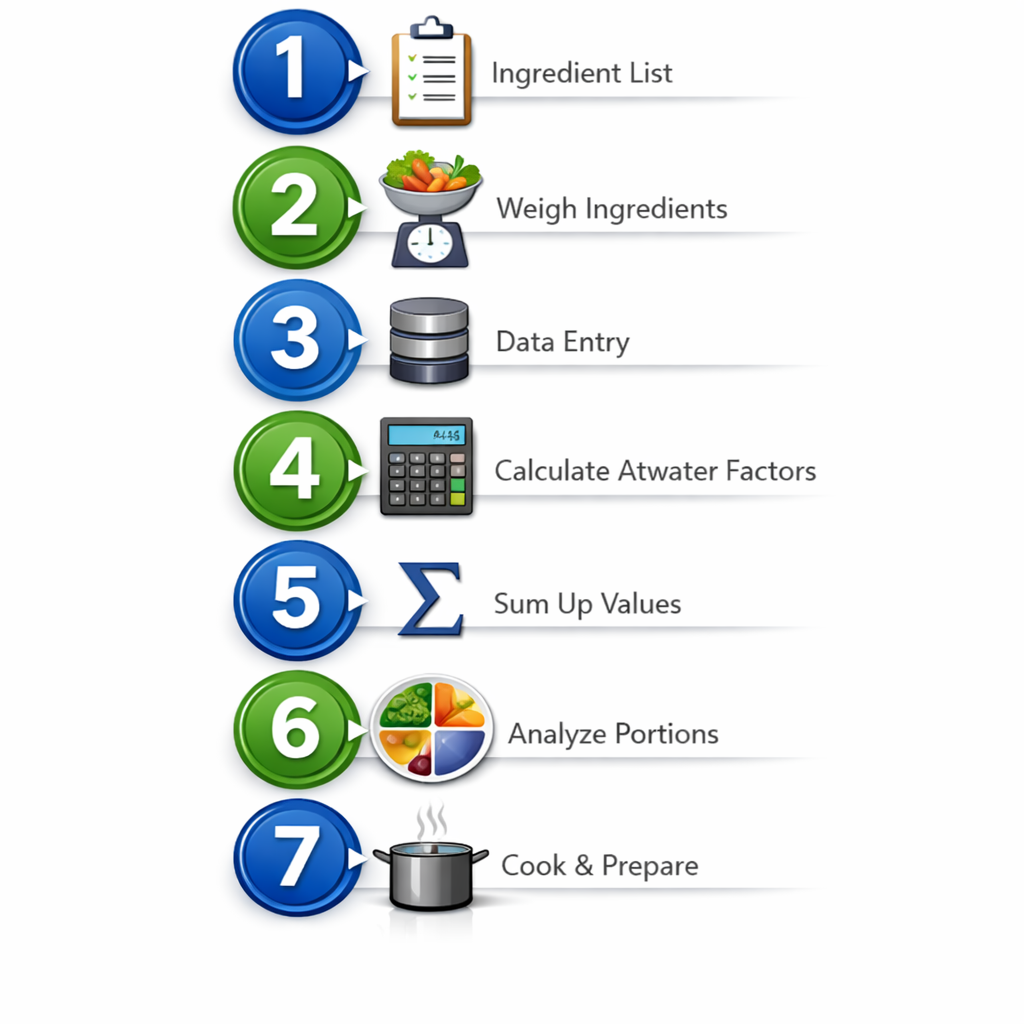
The process of calculating nutritional values begins with comprehensive data collection. Manufacturers must obtain detailed nutritional information for every ingredient in their formulation. This is where partnering with a supplier committed to transparency makes all the difference. At NutraAeon, we provide complete certificates of analysis and nutritional specifications for every ingredient, from our high-purity L-Tryptophan for sleep quality to our food-grade Magnesium Oxide for nutritional fortification.
Step one involves creating a complete ingredient inventory with precise weights or percentages. For a hypothetical sleep support supplement, this might include 200mg of L-Tryptophan, 100mg of Glycine, 50mg of Vitamin B6, and other supporting ingredients. Each component’s contribution must be calculated individually before summing the total.
Step two applies the appropriate energy factors to each macronutrient-containing ingredient. Let’s walk through a simplified example calculation for a protein-based supplement serving containing 5 grams of protein, 2 grams of carbohydrates, and 0.5 grams of fat:
- Protein calories: 5 grams × 4 kcal/gram = 20 kcal
- Carbohydrate calories: 2 grams × 4 kcal/gram = 8 kcal
- Fat calories: 0.5 grams × 9 kcal/gram = 4.5 kcal
- Total calories: 20 + 8 + 4.5 = 32.5 kcal
In practice, manufacturers would round this to 33 calories per serving, following FDA rounding guidelines. However, this basic calculation only scratches the surface. Manufacturers must also account for ingredients that don’t fit neatly into the three macronutrient categories.
Many supplement ingredients—vitamins, minerals, amino acids used in sub-gram quantities—contribute negligible calories but must still be included in the nutritional declaration. This is where technical expertise becomes invaluable. Understanding which ingredients to include in calorie calculations versus which to list only in the “other ingredients” section requires familiarity with both nutritional chemistry and regulatory expectations.
Step three involves validation. Manufacturers should cross-reference their calculations against multiple data sources—the USDA National Nutrient Database, supplier specifications, and published research on specific ingredients. Discrepancies should be investigated and resolved before finalizing the label. This validation process embodies NutraAeon’s commitment to quality, ensuring that every number on the label reflects rigorous scientific analysis.
Presenting Nutritional Data: US and EU Label Formats
Once calculations are complete, manufacturers face the critical task of presenting this information in regulatory-compliant formats. The US and EU have distinct requirements for nutrition label presentation, and manufacturers seeking to market in both regions must prepare labels that satisfy both frameworks.
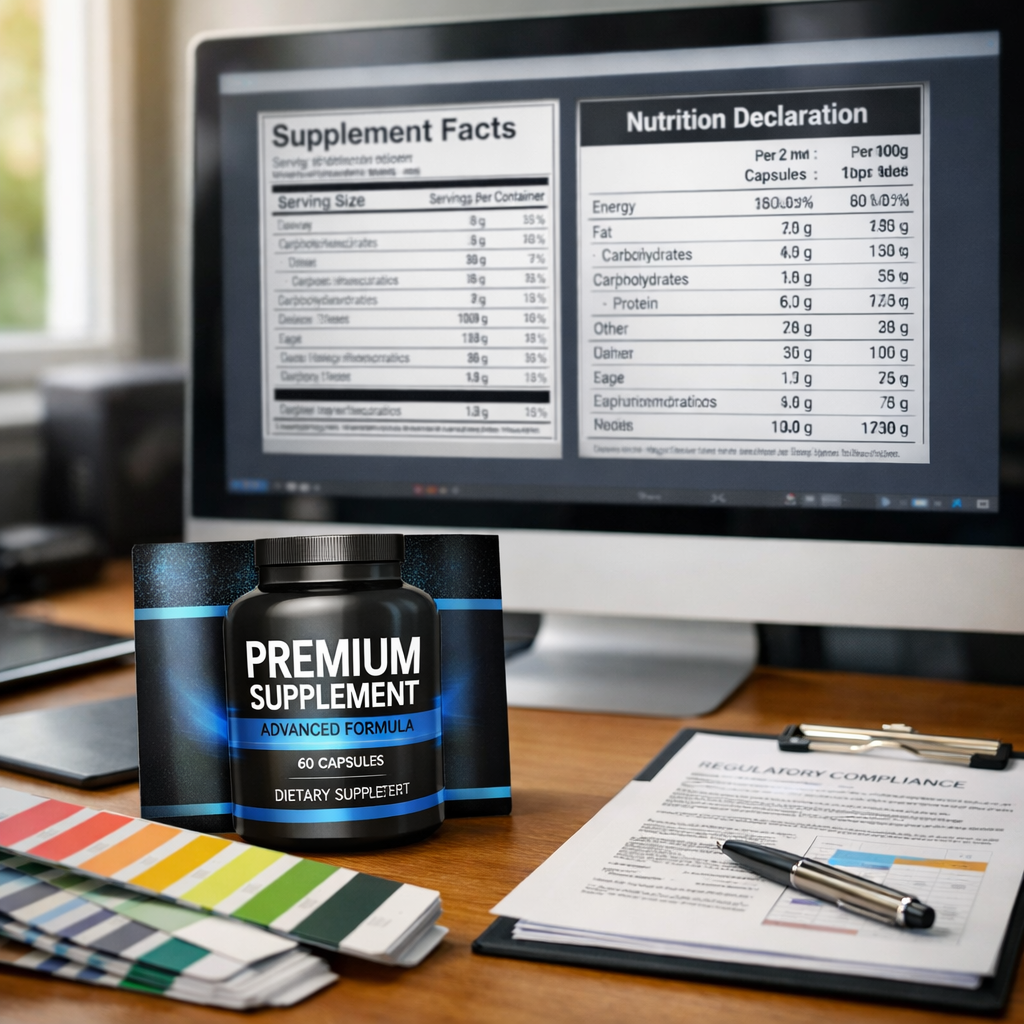
In the United States, the FDA mandates the “Nutrition Facts” panel format, which must appear in a specific tabular layout with boldface type for key information. The panel begins with serving size, prominently displays total calories, and lists nutrients in a prescribed order: total fat, cholesterol, sodium, total carbohydrate, and protein, followed by vitamins and minerals. The 2016 FDA label modernization updated these requirements to emphasize nutrients of public health concern, including added sugars and vitamin D.
For supplement manufacturers, the FDA allows a simplified “Supplement Facts” panel format that accommodates the unique nature of dietary supplements. This format includes similar elements but provides flexibility for listing botanical ingredients, proprietary blends, and nutrients without established Daily Values. The key is ensuring that all declared values are scientifically substantiated and accurately reflect the product formulation.
European Union regulations require a different presentation format under Regulation (EU) No 1169/2011. The nutrition declaration must be presented in tabular form when space permits, with numerical values aligned in columns. The order differs from US requirements: energy (expressed in both kJ and kcal), fat, saturates, carbohydrate, sugars, protein, and salt. Additional nutrients may be listed voluntarily, but mandatory nutrients must always appear first.
The EU format also requires bilingual labeling in some markets. Canada, for instance, requires both English and French text. Manufacturers planning global distribution must account for these multilingual requirements from the outset, ensuring sufficient label space and proper formatting for all language versions.
Complete documentation forms the backbone of regulatory compliance. Manufacturers must maintain a clear data trail showing how each nutritional value was derived—certificates of analysis, calculation worksheets, analytical testing results, and references to databases or published literature. This includes supplier certificates of analysis, calculation worksheets, analytical testing results, and references to databases or published literature. If a regulatory authority questions a declared value, manufacturers must be prepared to demonstrate their methodology with supporting evidence.
NutraAeon’s philosophy of transparency extends to this documentation process. When we supply premium ingredients like L-Serine for cognitive support or our comprehensive B-Complex family, we provide complete analytical specifications that manufacturers can directly incorporate into their nutritional calculations. This full supply chain visibility, from source to delivery, ensures that our partners can defend their label claims with confidence.
Practical Implementation: Tips and Common Pitfalls
Implementing a nutritional value calculator effectively requires more than just understanding the mathematics. Manufacturers should establish reproducible systems that ensure consistency across product lines and facilitate updates when formulations change.
Creating spreadsheet templates represents one of the most practical approaches. A well-designed template includes columns for ingredient names, quantities, macronutrient composition, energy factors, and calculated calorie contributions. Formulas should be transparent and clearly labeled, allowing quality assurance teams to verify calculations at a glance. Many manufacturers create master templates that can be duplicated and modified for each new product, ensuring standardized methodology across their entire portfolio.
Accounting for ingredient-specific factors requires attention to detail. Not all proteins have identical amino acid profiles or digestibility coefficients. High-quality whey protein isolate may justify using a specific Atwater factor of 4.27 kcal/gram rather than the general 4.0 kcal/gram, based on its superior digestibility. Similarly, manufacturers working with modified starches or resistant dextrins should apply appropriate reduced calorie values rather than the standard 4 kcal/gram for carbohydrates.
One of the most common pitfalls involves failing to account for processing losses or gains. Ingredients may lose moisture during manufacturing, concentrating their nutritional content. Conversely, some processes may introduce additional components—coating agents, flowing agents, or stabilizers—that contribute to the final nutritional profile. Manufacturers must calculate nutritional values based on the finished product as consumed, not simply the sum of raw ingredient values.
Another frequent error involves inconsistent rounding practices. The FDA provides specific rounding rules based on serving size and nutrient levels. Calories should be rounded to the nearest 5-calorie increment for values above 50 calories, but expressed as “less than 5” for values below 5 calories. Fat content below 0.5 grams per serving can be declared as zero, but this doesn’t eliminate the need to include those calories in the total calorie calculation. These nuances can trip up even experienced formulators.
Manufacturers must also avoid the temptation to “optimize” nutritional values through selective calculation methods. Using general Atwater factors for one ingredient and specific factors for another, simply to achieve a desired calorie count, undermines both scientific integrity and regulatory compliance. Consistency in methodology across all ingredients ensures defensible calculations.
Staying current with regulatory changes represents an ongoing challenge. Both the FDA and EU regulatory bodies periodically update their requirements. In recent years, the FDA’s definition of dietary fiber has expanded, affecting how certain ingredients must be declared. The EU has modified energy conversion factors for specific polyols and novel ingredients. Manufacturers using a nutritional value calculator must ensure their systems reflect current regulations, not outdated standards.
Testing and verification provide the ultimate safeguard. While calculations based on ingredient specifications form the foundation of nutritional labeling, periodic analytical testing of finished products confirms accuracy. Discrepancies between calculated and tested values may reveal issues with ingredient specifications, manufacturing processes, or calculation methodology. This closed-loop system of calculate-manufacture-test-verify exemplifies the quality commitment that distinguishes leading supplement manufacturers.
Strategic Partnership for Nutritional Excellence
As the supplement industry continues to evolve, manufacturers face increasing complexity in formulation, regulation, and consumer expectations. Success requires more than just quality ingredients—it demands rigorous scientific processes, complete transparency, and empowerment through technical expertise. A nutritional value calculator is not merely a tool for compliance; it’s a strategic asset that enables informed decision-making throughout product development.
At NutraAeon, we position ourselves as a global nutritional ingredients partner precisely because we understand these challenges. Our comprehensive supply network provides access to premium-quality raw materials—from amino acids that support stress relief and sleep quality to vitamins and minerals that form the foundation of nutritional fortification. But our partnership extends beyond ingredient supply. We empower formulations with technical expertise, regulatory guidance, and market insights that help our clients create products that stand out in a competitive landscape.
When manufacturers implement rigorous nutritional value calculations as part of their development process, they demonstrate respect for their customers and commitment to quality. They position themselves as trustworthy sources of health solutions rather than mere product vendors. They build brands that can withstand regulatory scrutiny and maintain consumer confidence even as market dynamics shift.
Forward-thinking supplement manufacturers recognize that every decision made before launch—from ingredient selection to nutritional calculation to label design—shapes the product’s ultimate success. By investing in accurate nutritional value calculation, manufacturers invest in their brand’s long-term integrity. They create products that deliver on their promises, labels that reflect scientific truth, and customer relationships built on transparency.
The question is not whether supplement manufacturers can afford to implement rigorous nutritional value calculations before launch. The question is whether they can afford not to. In an industry where trust is paramount and regulatory compliance is non-negotiable, a nutritional value calculator represents essential infrastructure for success. It’s the foundation upon which quality products, transparent labeling, and empowered consumers are built—principles that align perfectly with NutraAeon’s vision of excellence in nutritional ingredient partnership.