The nutritional ingredients market stands at a pivotal moment in 2024, evolving from a niche sector into a cornerstone of the global wellness industry. As consumers increasingly prioritize health and preventative care, the demand for high-quality nutritional ingredients has never been stronger. This transformation represents more than just market expansion—it signals a fundamental shift in how people approach nutrition, health, and longevity.
For manufacturers and formulators, understanding the trajectory of this market isn’t optional; it’s essential for survival and success. Strategic nutritional ingredients selection determines whether brands thrive or struggle in this expanding marketplace. The nutritional ingredients market encompasses everything from amino acids and vitamins to minerals and specialized bioactive compounds that power functional foods, dietary supplements, and fortified beverages. These ingredients form the foundation of products that millions of consumers rely on daily to support their health goals.
The significance of this market extends beyond impressive revenue figures. It reflects growing consumer awareness, advances in nutritional science, and the democratization of health optimization. What was once the domain of elite athletes and health enthusiasts has become mainstream, with everyday consumers seeking targeted nutritional support for everything from immune function to cognitive performance.
A Global Market Landscape Poised for Explosive Growth
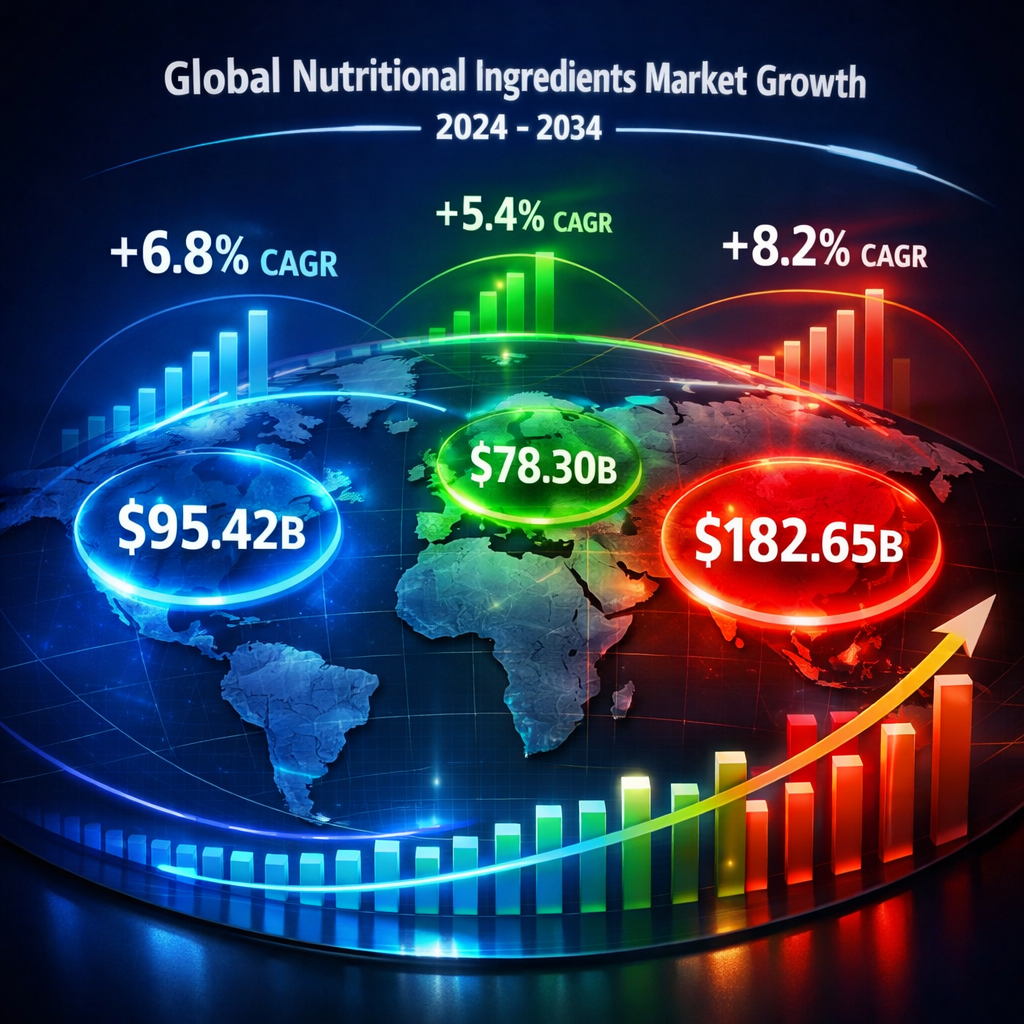
The numbers tell a compelling story. The global nutritional ingredients market is experiencing unprecedented expansion, with projections showing remarkable momentum through the end of the decade. The food supplement ingredients market alone is expected to surge from $18.54 billion in 2026 to $35.28 billion by 2034, representing a robust compound annual growth rate that underscores the sector’s vitality.
The functional food ingredients segment demonstrates even more impressive dynamics, projected to reach $165.8 billion by 2029 from $119.2 billion in 2024. This growth isn’t happening uniformly across the globe—regional variations reveal fascinating patterns that smart manufacturers must understand.
Asia Pacific has emerged as the undisputed leader in the nutraceuticals market, valued at $116.32 billion in 2025 and forecast to reach $182.65 billion by 2026. This region’s dominance stems from several factors: rapidly growing middle classes with increasing disposable income, strong cultural traditions emphasizing preventative health, and government initiatives supporting nutritional awareness. Countries like India are leading the charge in functional foods and beverages, with growth rates approaching 9% CAGR in certain segments.
North America, while not the largest market, is positioned as the fastest-growing region, driven by sophisticated consumers demanding transparency and efficacy. The North American trend toward cleaner labels and natural ingredients reflects a mature market where consumers scrutinize ingredient lists with unprecedented attention.
The intersection between the broader nutraceuticals market and the nutritional ingredients sector creates a symbiotic relationship. As consumer products evolve and differentiate, the demand for innovative, science-backed ingredients intensifies. This dynamic ensures that ingredient suppliers who can deliver quality, documentation, and innovation will find abundant opportunities.
Powerful Demand Drivers Reshaping the Industry
Three fundamental forces are propelling the nutritional ingredients market forward, and understanding these drivers helps manufacturers position themselves strategically.
Rising health consciousness represents the most visible driver. The global pandemic accelerated a trend that was already underway—consumers taking proactive responsibility for their health. This isn’t about reacting to illness; it’s about optimizing wellness. Over 70% of U.S. consumers now show increased willingness to purchase vitamins and dietary supplements tailored to their specific health needs, according to 2024 surveys.
This consciousness extends beyond simple supplementation. Consumers are educating themselves about specific nutrients, researching ingredient forms and bioavailability, and seeking products that address their unique health concerns. They’re no longer satisfied with generic multivitamins; they want targeted support for sleep quality, cognitive function, immune resilience, or athletic performance.
The demand for personalized nutrition has evolved from a buzzword into a legitimate market force. The personalized nutrition market is projected to reach $30.94 billion by 2030 from $15.79 billion in 2025, growing at a CAGR of 14.4%. This growth reflects consumers’ recognition that one-size-fits-all approaches to nutrition fall short of optimal health.
Personalization manifests in various ways—from DNA-based supplement recommendations to AI-powered nutrition tracking apps that analyze over 1.5 billion meals monthly globally. For ingredient suppliers, this trend creates both challenges and opportunities. Manufacturers need flexible ingredient sourcing partners who can provide diverse, high-quality raw materials suitable for customized formulations.
Perhaps most importantly, consumers now demand transparent, science-backed products. They want to see certificates of analysis, understand sourcing origins, and verify that claims are supported by rigorous research. This demand for transparency aligns perfectly with NutraAeon’s core philosophy—we believe that complete documentation and supply chain visibility aren’t optional extras but fundamental requirements.
The era of proprietary blends hiding behind vague marketing has passed. Today’s consumers expect to know exactly what they’re consuming, where it comes from, and what evidence supports its use. This shift elevates suppliers who prioritize quality control and testing protocols, rewarding those who invest in rigorous standards.
Five Core Trends Shaping the Market’s Future
Understanding broad market drivers provides context, but specific trends reveal where opportunities lie. Five interconnected trends are defining the nutritional ingredients market in 2024 and beyond.
Gut-Brain-Immune Axis Takes Center Stage
The scientific understanding of how gut health, cognitive function, and immune response interconnect has revolutionized nutritional formulation. Probiotic supplements hit $2.1 billion in sales, up 5.6% in 2024, reflecting growing consumer awareness of the microbiome’s importance.
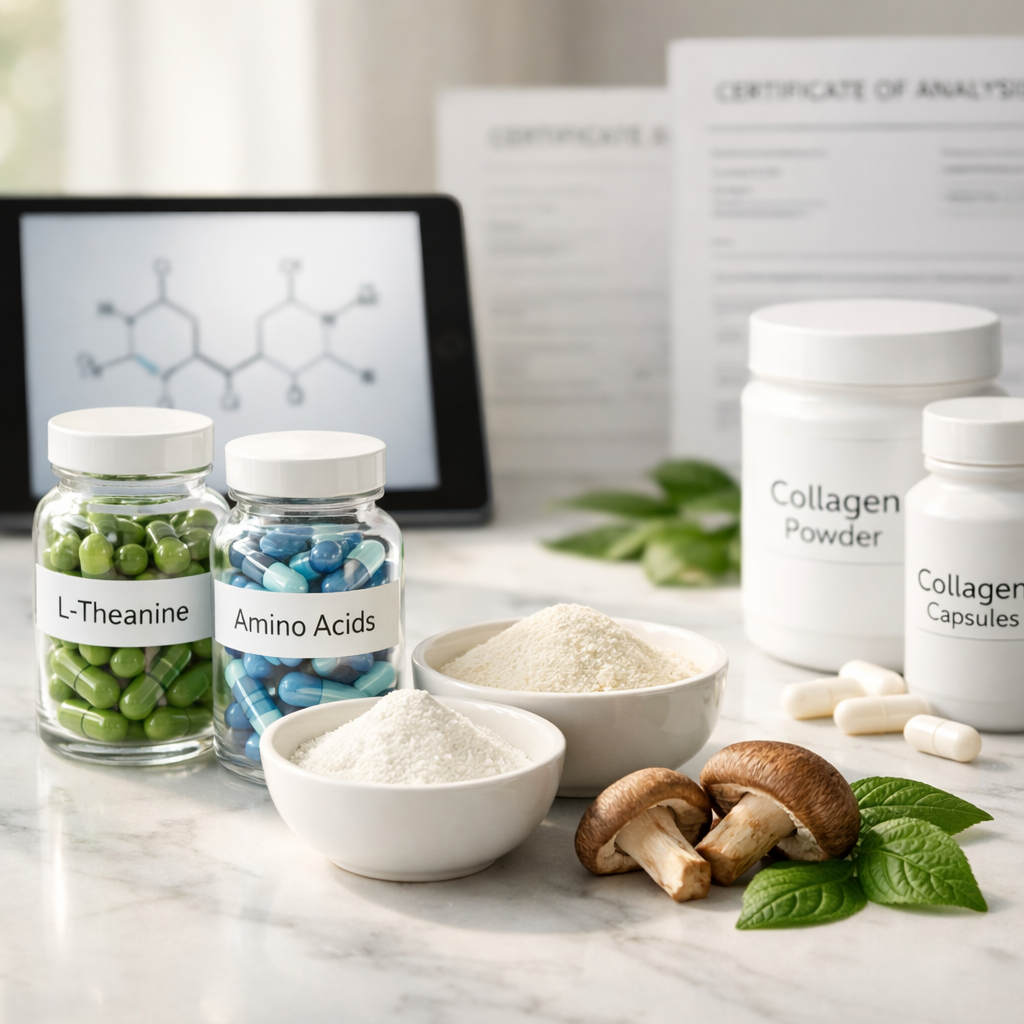
But this trend extends beyond probiotics. Ingredients that support the gut-brain connection are experiencing explosive growth. Amino acids like L-Theanine, which promotes relaxation without sedation, and L-Tryptophan, a precursor to serotonin, are increasingly valued for their cognitive and mood benefits. The recognition that digestive health influences everything from mental clarity to immune function has created demand for ingredients that support this complex system holistically.
Manufacturers formulating products that address multiple aspects of this axis—combining prebiotic fibers with stress-supporting amino acids and immune-modulating vitamins—are finding strong market reception.
Plant-Based Ingredients Dominate Innovation
The plant-based movement has transcended diet trends to become a defining force in nutritional ingredients. Consumers—including omnivores—are increasingly drawn to plant-derived nutrients, driven by sustainability concerns, perceived health benefits, and ethical considerations.
This shift creates opportunities for innovative ingredient sourcing. Plant-based alternatives to traditional animal-derived nutrients are in high demand, but quality remains paramount. Consumers want plant-based options that match or exceed the bioavailability and efficacy of conventional sources.
The challenge for manufacturers is sourcing plant-based ingredients that meet rigorous purity standards while maintaining cost-effectiveness. This is where strategic partnerships with ingredient suppliers become crucial—access to verified, high-quality plant-based raw materials can differentiate a product line.
Function-Focused Ingredients Command Premium Positioning
Gone are the days when basic nutritional adequacy satisfied consumers. Today’s market demands ingredients tied to specific functional benefits—improved sleep, enhanced focus, faster recovery, or stronger immunity.
This trend is evident in specific ingredient categories. Mushroom-based supplements reached $454 million in sales, up 14.6% in 2024, driven by interest in adaptogens and immune support. Collagen supplements surged to $931 million, up 18.6%, reflecting consumer focus on skin health, joint function, and healthy aging.
For formulation scientists, this trend requires deep understanding of ingredient mechanisms and synergies. It’s not enough to include an ingredient—manufacturers must articulate how that ingredient delivers tangible benefits. This demands robust scientific support and often necessitates combining complementary nutrients for enhanced efficacy.
Consider L-Serine for cognitive support or Glycine for sports nutrition recovery. These amino acids offer specific functional benefits that resonate with targeted consumer segments. Manufacturers who can effectively communicate these benefits, backed by solid research, position themselves for success.
Personalized Nutrition Reaches Mainstream
While we’ve discussed personalized nutrition as a demand driver, it’s also reshaping ingredient requirements. Personalized dietary supplements, including targeted vitamins and probiotics, will dominate the market with an estimated 45.3% share in 2025.
This personalization trend requires ingredient suppliers to offer diverse portfolios with various forms, potencies, and delivery mechanisms. A one-size-fits-all ingredient catalog no longer suffices. Manufacturers need access to L-Theanine for some formulations and L-Tryptophan for others, different forms of Vitamin C for varied applications, and multiple mineral compounds to address specific bioavailability needs.
The rise of direct-to-consumer channels, which dominated the personalized nutrition market in 2024, accelerates this trend. Brands selling directly to consumers can gather feedback, iterate formulations, and respond to specific customer needs with agility—but only if their ingredient suppliers can match that flexibility.
Clean-Label Demands Reshape Formulation
The clean-label movement has evolved from preference to expectation. North American consumers particularly show strong inclination toward natural and organic ingredients, scrutinizing labels for artificial additives, fillers, and synthetic compounds.
This trend impacts every aspect of ingredient sourcing—from raw material selection to processing methods. Consumers want ingredients they recognize, processed minimally, and free from controversial additives. The challenge for manufacturers is meeting these expectations without compromising efficacy or stability.
Clean-label demands also intersect with transparency requirements. Consumers want to understand not just what’s in their supplements but how those ingredients were produced. This creates opportunities for suppliers who can provide comprehensive documentation about sourcing, testing, and manufacturing processes.
At NutraAeon, we recognize that clean-label isn’t just about marketing—it reflects genuine consumer values around health and transparency. Our commitment to complete documentation and supply chain visibility addresses this trend directly, empowering manufacturers to confidently communicate their product’s purity and origins.
Growth Opportunities by Segment and Region
Smart manufacturers don’t just track overall market growth—they identify specific segments and regions where opportunities concentrate.
Functional foods represent the largest segment within nutritional ingredients applications, commanding 43.6% market share in 2024. This category includes fortified cereals, enhanced beverages, protein bars, and numerous everyday foods augmented with nutritional ingredients. The opportunity here lies in developing ingredients suitable for food matrices—stable under processing conditions, neutral in taste impact, and cost-effective at food-grade volumes.
Dietary supplements remain the most dynamic segment for premium ingredients. While representing a smaller volume compared to functional foods, supplements allow higher ingredient concentrations and more specialized applications. The cellular nutrition market, valued at $673.7 million in 2025, exemplifies this trend—sophisticated formulations targeting cellular health with premium ingredients.
The plant-based ingredients market deserves special attention. Beyond moral or environmental considerations, plant-based ingredients increasingly demonstrate unique nutritional properties that animal-derived alternatives cannot match. The challenge and opportunity lie in sourcing plant-based ingredients with verified purity and potency.
Regionally, Asia Pacific will continue dominating absolute market size, but North America offers the highest growth rates and premium pricing. European markets show sophisticated demand for organic and sustainably sourced ingredients. Each region presents distinct opportunities—manufacturers must align their ingredient strategies with regional preferences and regulatory requirements.
The vitamin supplements segment, accounting for 27.7% of revenue in 2024, continues growing as consumers become aware of nutritional gaps in modern diets. However, not all vitamin forms are equal—consumers increasingly seek specific forms with superior bioavailability, like Vitamin C Palmitate or specific tocopherol forms in Vitamin E supplements.
Consumer Behavior and the Regulatory Environment
Success in the nutritional ingredients market requires understanding both what consumers want and what regulations require.
Transparency has shifted from differentiator to baseline expectation. Consumers expect to access complete information about ingredient sourcing, testing protocols, and scientific substantiation. This transparency extends beyond marketing claims to encompass the entire supply chain—where ingredients originate, how they’re processed, and what quality controls ensure purity.
The demand for efficacy support parallels transparency expectations. Consumers want evidence that ingredients deliver promised benefits. This doesn’t necessarily mean expensive clinical trials for every formulation, but it does require solid scientific rationale and, where available, research supporting ingredient efficacy.
Labeling standards continue evolving, with regulatory bodies worldwide tightening requirements for supplement fact panels, allergen declarations, and health claims. Manufacturers must stay current with these requirements—and ingredient suppliers play a crucial role by providing accurate specifications and documentation that facilitate compliance.
The rise of e-commerce and direct-to-consumer channels fundamentally changes how manufacturers approach the market. Online channels enable brands to educate consumers, gather feedback, and build communities around their products. However, success in these channels requires absolute confidence in ingredient quality—negative reviews spread instantly, and quality issues can devastate a brand overnight.
This environment rewards manufacturers who partner with ingredient suppliers committed to rigorous quality standards. Industry-leading testing protocols, certificates of analysis for every batch, and responsive technical support become competitive advantages in the direct-to-consumer landscape.
Strategic Implications for Brands and Investors
These trends and market dynamics create clear strategic imperatives for manufacturers and investors in the nutritional ingredients space.
Invest in R&D and Innovation
The pace of nutritional science continues accelerating. New ingredients enter the market regularly, existing ingredients find novel applications, and synergistic combinations demonstrate enhanced benefits. Manufacturers must maintain robust R&D capabilities or partner with suppliers who provide technical expertise and formulation support.
Innovation doesn’t always mean novel ingredients—sometimes it means finding superior forms of established nutrients or developing more effective delivery mechanisms. The key is staying current with scientific literature and translating research into practical applications.
Expand Plant-Based Portfolios
Given the trajectory of plant-based demand, manufacturers should audit their ingredient portfolios for opportunities to incorporate plant-derived alternatives. This doesn’t mean abandoning effective conventional ingredients, but it does mean offering options that meet evolving consumer preferences.
The challenge lies in sourcing plant-based ingredients that meet quality standards comparable to traditional options. This requires careful supplier vetting and often necessitates premium pricing—but consumers increasingly demonstrate willingness to pay for plant-based, sustainably sourced ingredients.
Optimize Supply Chain Strategies
Market growth creates supply chain pressures. Popular ingredients may face availability constraints, and quality can suffer as demand outstrips supply from reputable sources. Forward-thinking manufacturers develop strategic relationships with ingredient suppliers who maintain reliable access to high-quality raw materials.
Supply chain optimization also means building flexibility—the ability to adapt formulations if ingredient availability changes or new research suggests superior alternatives. This flexibility requires ingredient partners who offer diverse portfolios and technical support for reformulation.
Pursue Strategic Partnerships
No manufacturer can maintain expertise across every ingredient category or navigate every regional market independently. Strategic partnerships—with ingredient suppliers, research institutions, and distribution channels—multiply capabilities and accelerate growth.
The most valuable partnerships extend beyond transactional relationships to collaborative problem-solving. When ingredient suppliers understand manufacturers’ strategic goals and market positioning, they can proactively suggest solutions, alert partners to emerging opportunities, and support brand differentiation.
At NutraAeon, we view ourselves as true partners to the manufacturers we serve. Our commitment extends beyond delivering ingredients to empowering formulations with technical expertise, regulatory guidance, and market insights that help brands succeed.
Balance Affordability with Quality
Market growth creates opportunities at every price point, but the temptation to compete solely on price can be destructive. Consumers increasingly recognize that quality matters—they understand that the cheapest supplement often delivers inferior results.
The strategic opportunity lies in communicating value effectively. When manufacturers can articulate why their premium-quality ingredients justify higher prices—through superior bioavailability, rigorous testing, or unique sourcing—consumers respond positively. This requires transparency around ingredient selection and partnership with suppliers who can substantiate quality claims.
Positioning for Success in a Growing Market
The nutritional ingredients market’s growth trajectory through 2024 and beyond presents extraordinary opportunities for manufacturers who understand evolving trends and align their strategies accordingly. The convergence of health consciousness, personalization demands, and transparency expectations creates an environment where quality, innovation, and trust determine success.
For manufacturers navigating this landscape, ingredient sourcing represents both a critical risk and a significant opportunity. Poor quality ingredients or unreliable suppliers can undermine even the most innovative formulations, while strategic partnerships with committed ingredient providers can become genuine competitive advantages.
The trends we’ve explored—from gut-brain-immune axis focus to clean-label demands—aren’t isolated phenomena. They represent interconnected shifts in consumer values and scientific understanding that will continue reshaping the market for years to come. Manufacturers who anticipate these trends rather than react to them will capture disproportionate value.
At NutraAeon, we’re committed to being more than an ingredient supplier—we aim to be a trusted partner in our customers’ success. Our philosophy of quality, transparency, and empowerment directly addresses the market trends defining 2024. Through industry-leading testing protocols, complete supply chain visibility, and comprehensive technical support, we help manufacturers create products that stand out in an increasingly competitive landscape.
The nutritional ingredients market’s growth isn’t just about expanding revenue opportunities—it reflects a fundamental shift in how humanity approaches health and wellness. As consumers increasingly take proactive responsibility for their well-being, they demand products built on a foundation of premium ingredients, scientific integrity, and transparent sourcing.
For forward-thinking manufacturers willing to invest in quality, embrace transparency, and partner strategically, the opportunities ahead are extraordinary. The market is growing, consumers are engaged, and the science supporting nutritional intervention continues advancing. Success belongs to those who recognize that exceptional products start with exceptional ingredients—and who choose partners committed to delivering nothing less.