The landscape of food purchasing has transformed dramatically. What was once exclusive territory for restaurant owners and food service professionals now welcomes everyday consumers through their doors. Wholesale food distributors open to the public represent a retail-access model that fundamentally changes how individuals and families approach bulk buying. These distributors allow non-business shoppers to purchase large-volume, restaurant-grade items directly from suppliers who traditionally served only commercial clients. You can walk into these warehouses and access the same high-quality ingredients that stock professional kitchens, from 50-pound bags of flour to cases of premium olive oil. This shift democratizes access to quality ingredients while offering substantial savings potential for those willing to buy in larger quantities.
Understanding the Access Models Available
Navigating wholesale distributors requires understanding the various access models they employ. The most straightforward option is the “open to public” store format, where anyone can simply walk in and shop without any membership or business credentials. Shamrock Foodservice Warehouse operates several locations using this model, welcoming both commercial buyers and home consumers without distinction. CHEF’STORE, another prominent example, maintains open-access locations across multiple states where you can browse aisles of professional-grade products without presenting business documentation.
The cash-and-carry system represents another common approach. These operations focus on immediate transactions where you pay at checkout and transport purchases yourself. Canton Food Co. in Los Angeles exemplifies this model, serving both wholesale food service professionals and individual buyers since 1969. The straightforward nature eliminates delivery fees and allows you to select products personally, ensuring freshness and quality.

Membership-based access introduces a slight barrier but often provides enhanced benefits. Some distributors offer free membership registration that simply tracks your purchase history and provides access to exclusive deals. Others charge annual membership fees ranging from $25 to $60 in exchange for guaranteed lower pricing structures. Restaurant Depot operates on this membership model, requiring registration but providing access to deeply discounted bulk products once approved.
Optional membership tiers create flexibility for different buying patterns. You might shop as a guest at regular prices, or join a membership program for additional discounts if your volume justifies the investment. This tiered approach accommodates both occasional bulk buyers and regular customers who benefit from membership perks.
Product Categories and Selection Range
Walking into a public-access wholesale distributor reveals a product universe far beyond typical grocery stores. Broadline distributors stock comprehensive inventories covering dry groceries, canned goods, baking supplies, and shelf-stable items in commercial quantities. You’ll find 25-pound bags of rice, gallon containers of cooking oils, and cases of canned tomatoes that would take months to deplete in a home kitchen.
Perishables constitute a significant category advantage. Fresh meat departments offer whole cuts, bulk ground beef, and case-packed chicken breasts at per-pound prices that challenge retail grocery stores. Seafood sections provide restaurant-quality options including whole fish, bulk shrimp, and premium selections often unavailable in standard supermarkets. The dairy and produce sections similarly emphasize volume, with 5-pound cheese blocks, case quantities of eggs, and bulk fresh vegetables.
Beyond food, these distributors stock equipment and supplies that support food preparation and storage. Commercial-grade kitchen tools, heavy-duty storage containers, and food-safe packaging materials fill additional aisles. This comprehensive selection makes these venues one-stop destinations for anyone serious about home cooking, meal preparation, or small-scale food production.
The quality-volume proposition sets wholesale distributors apart. Products meet food service standards designed for professional kitchen demands. The ingredients that create restaurant meals become accessible for your home kitchen, often at 30-50% below retail pricing when calculated per unit.
The Operational Framework of Wholesale Distribution
Understanding how wholesale distributors function illuminates their value proposition. These businesses serve as critical intermediaries connecting producers and manufacturers with end buyers. They purchase massive quantities directly from food producers, creating economies of scale that reduce per-unit costs. This direct relationship with manufacturers eliminates multiple middleman markups that typically inflate retail prices.
The bulk pricing structure reflects these operational efficiencies. When you purchase a case of canned beans rather than individual cans, you’re essentially receiving the distributor’s wholesale cost plus a modest markup rather than bearing the accumulated markups through traditional retail channels. A single can might cost $1.50 at a grocery store, but a 24-can case at a wholesale distributor might total $18—just 75 cents per can.
Consistent supply represents another operational advantage. Distributors maintain substantial inventories and established supplier relationships that ensure product availability even during shortage periods or seasonal fluctuations. This reliability matters whether you’re planning meals for a large family or operating a small catering business from home.
Volume discounts typically apply at quantity thresholds. Smart procurement strategies help maximize these savings opportunities. Purchasing multiple cases of the same item often triggers additional percentage discounts. Some distributors offer mix-and-match case deals where you can combine different products to reach discount thresholds. These pricing structures reward planning and larger purchases, making them ideal for buyers who can properly store bulk quantities.
Notable Public-Access Distributors Worth Exploring
CHEF’STORE operates over 70 locations across the United States, positioning itself as “the public foodservice market.” Their open-access policy welcomes everyone from professional chefs to home cooking enthusiasts. The product range spans fresh meat and seafood, produce, dry goods, beverages, and kitchen equipment. Their everyday low pricing philosophy eliminates the need to wait for sales, though promotional offers provide additional savings opportunities.
Food Fest Depot serves communities with straightforward cash-and-carry operations. Their no-frills approach focuses on competitive pricing and high product turnover, ensuring freshness across perishable categories. The warehouse atmosphere might lack grocery store polish, but the value proposition attracts practical shoppers prioritizing cost savings over ambiance.
Restaurant Depot requires membership but accepts both business and personal accounts. With over 130 locations, they provide extensive geographic coverage and deeply discounted pricing structures. The membership screening process takes minutes, requiring basic identification and optionally, business documentation for additional discounts. Their meat departments particularly impress, offering butcher-shop quality at wholesale prices.
Woolco Foods and similar regional distributors provide localized alternatives with community connections. These smaller operations often carry regional specialties and build relationships with local producers. While their selection might not match national chains, their personalized service and neighborhood presence offer distinct advantages.
At NutraAeon, we recognize how ingredient quality fundamentally impacts final product excellence. The same principle that guides our sourcing of premium nutritional ingredients—L-Theanine for stress relief, high-purity amino acids, comprehensive vitamin offerings—applies to food purchasing generally. Quality ingredients at the source determine outcomes, whether you’re formulating supplements or preparing meals.
Purchasing Without Business Credentials
Many potential wholesale shoppers hesitate, believing these distributors require business licenses or tax identification numbers. While some locations do require documentation, numerous options welcome individual consumers without commercial credentials. Direct online wholesale portals increasingly serve home buyers, with platforms offering case-quantity ordering and home delivery. These digital channels eliminate geographic limitations and access concerns.
Visiting local stores in person provides the clearest understanding of access requirements. Call ahead or check websites for specific policies. Many locations openly state “no membership required” or “open to the public” on their signage and marketing materials. When membership is required, the registration process typically involves completing a simple application with basic contact information.
Business resale documents, including resale certificates and employer identification numbers, may unlock additional discounts at certain distributors. However, their absence shouldn’t prevent you from shopping. Personal memberships, even at locations primarily serving businesses, provide access to the same products at slightly higher pricing. The savings compared to retail grocery stores still justify the trip.
Practical preparation smooths your first wholesale shopping experience. Bring reusable bags or boxes for transporting bulk purchases. Many distributors don’t provide shopping bags, expecting customers to handle their own packaging. A cooler with ice packs preserves perishables during transport, especially for longer drives. Measuring your storage space beforehand prevents overbuying items that won’t fit in your pantry or freezer.
Pricing Structures and Real Savings Potential
Bulk-pack pricing drives the primary value proposition. A 10-pound bag of chicken breasts might cost $25 at a wholesale distributor—$2.50 per pound—compared to $4.99 per pound at retail grocery stores. This 50% savings scales across thousands of products. Dry goods show even more dramatic differences, with restaurant-sized containers of spices, oils, and condiments offering 60-70% savings over retail equivalents when calculated per ounce.
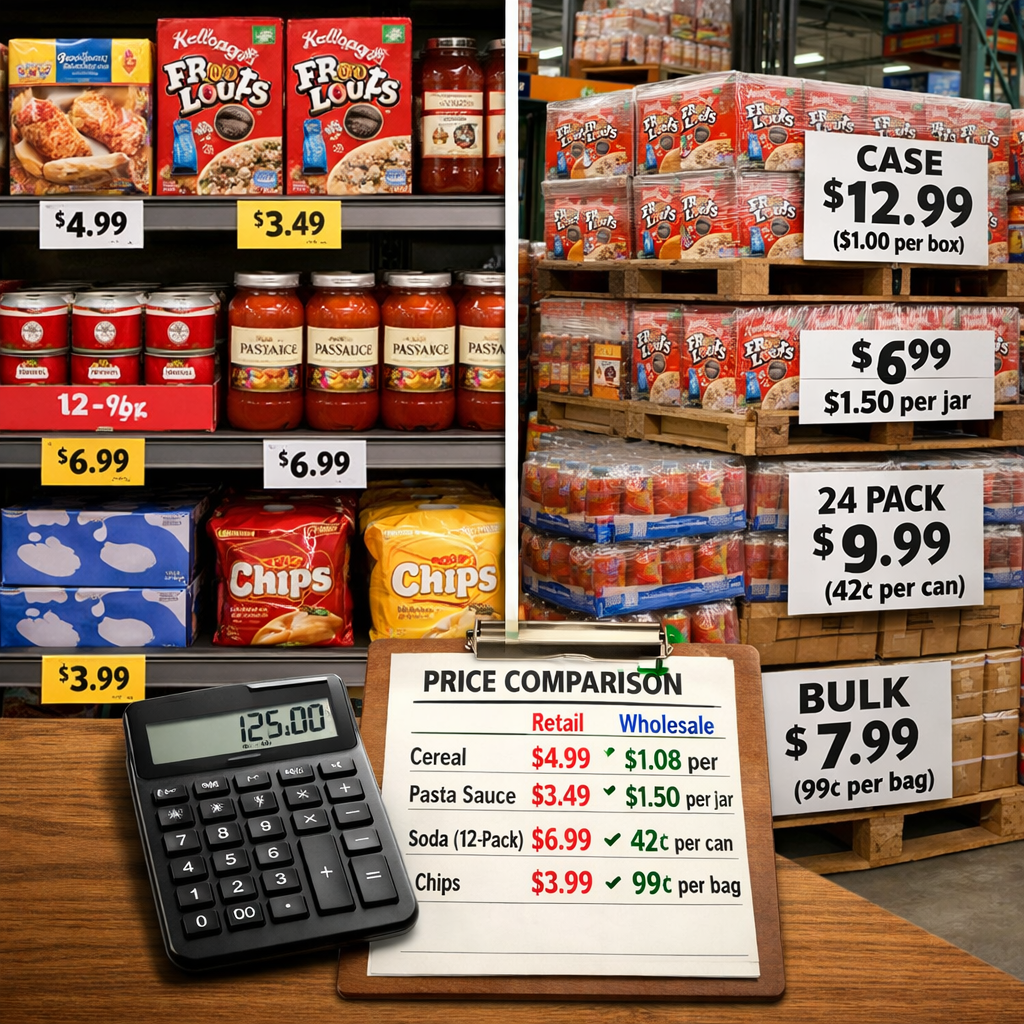
Everyday low prices versus promotional discounts represent different pricing philosophies among distributors. Some maintain consistently low pricing year-round, eliminating the need to watch for sales or time purchases. Others employ rotating promotional discounts on featured items, rewarding shoppers who plan purchases around weekly deals. Understanding each distributor’s approach helps optimize savings.
Hidden costs deserve consideration when calculating true savings. Membership fees, when required, should be divided across your annual purchases to determine per-trip cost. A $50 membership providing $200 in annual savings still nets $150 in benefits. Delivery charges, where applicable, typically range from $5-15 for local delivery or follow minimum-order thresholds. Self-pickup eliminates these fees while requiring your time and transportation.
Storage capabilities ultimately limit how much you should purchase. Proper food storage practices help maximize shelf life and prevent waste. That 50-pound flour bag offers excellent value, but if it goes rancid before you use half, the savings evaporate. Start with manageable quantities, especially for products you haven’t purchased bulk before. Freeze-appropriate items like meat, bread, and some produce extend shelf life, effectively expanding your storage capacity.
Evaluating Access Considerations and Trade-offs
Location convenience significantly impacts whether wholesale shopping becomes a sustainable habit or an occasional expedition. A 45-minute drive to the nearest distributor requires substantial purchases to justify travel time and fuel costs. Mapping distributors within reasonable distance identifies viable options. Some shoppers coordinate wholesale trips with other errands in the same area, maximizing efficiency.
Inventory diversity varies considerably among wholesale distributors. Larger operations like CHEF’STORE and Restaurant Depot stock 8,000-10,000 SKUs, rivaling supermarket variety. Smaller regional distributors might focus on 2,000-3,000 core items, emphasizing staples over specialty products. Your purchasing patterns determine whether limited selection presents problems or whether focused inventories actually simplify decision-making.
Return policies at wholesale distributors tend toward strictness compared to retail grocers. Most require receipt presentation and unopened packaging for returns. Perishable items face shorter return windows, often 24-48 hours with proof of refrigeration failure or quality issues. This policy framework expects buyers to inspect products at purchase rather than returning items casually. The trade-off for lower prices includes increased purchasing responsibility.
Quality transparency varies by distributor and product category. Reputable operations maintain proper refrigeration, rotate stock effectively, and follow food safety protocols meeting commercial standards. However, warehouse environments and bulk packaging reduce the curated presentation of retail grocery stores. You assume more responsibility for inspecting products, checking dates, and ensuring proper handling. This mirrors the quality-transparency philosophy NutraAeon applies to nutritional ingredients—complete documentation, certificates of analysis, and full supply chain visibility ensure informed decisions.
Partnership Opportunities for Small Businesses
Public-access wholesale distributors also serve small businesses seeking alternatives to traditional food service suppliers. Private-label opportunities exist for businesses interested in developing branded products using distributor networks. Some wholesalers facilitate connections between buyers and co-packers who can create custom products at scale. These partnerships particularly benefit small food entrepreneurs testing product concepts before committing to large-scale manufacturing.
Seasonal item procurement through wholesale channels helps businesses manage fluctuating demand. Holiday-specific ingredients, summer produce, or winter comfort foods can be ordered in appropriate quantities without long-term contracts. This flexibility supports businesses with variable seasonal needs while maintaining consistent supplier relationships.
Bulk procurement programs provide structured approaches for regular business buyers. Contracted pricing, scheduled deliveries, and dedicated account management create business-appropriate service levels. Even small operations purchasing moderate volumes may qualify for these programs, bridging the gap between retail shopping and full food service accounts.
Evaluation criteria for distributor partnerships should include product quality consistency, delivery reliability, pricing transparency, and customer service responsiveness. Safety compliance verification ensures distributors maintain proper permits, follow health department requirements, and carry appropriate insurance. These due diligence steps protect your business from supply chain disruptions and quality issues.
NutraAeon’s approach to partnership reflects similar principles. We empower formulations with technical expertise, regulatory guidance, and innovative ingredient solutions. Whether you’re sourcing L-Tryptophan for sleep quality supplements or Magnesium Oxide for nutritional fortification, the partnership quality determines product excellence. This same relationship-focused approach benefits businesses partnering with wholesale food distributors.
Your Quick-Start Action Plan
Ready to explore public-access wholesale options? Begin by identifying local outlets within practical driving distance. Google searches for “wholesale food distributors open to public” plus your city name reveal nearby options. Check distributor websites for specific location details, hours, and access requirements. Online reviews from non-business shoppers provide insights into the actual customer experience.
Verifying access terms prevents wasted trips. Call locations directly asking, “Can individuals shop without business licenses?” This simple question clarifies access immediately. Ask about membership requirements, costs, and whether free registration options exist. Inquire about payment methods, as some distributors remain cash-only or exclude credit cards in favor of debit transactions.
Comparing prices against your regular grocery spending establishes baseline savings potential. Create a list of 10-15 staple items you purchase regularly with retail prices noted. On your first wholesale visit, compare these specific items to quantify actual savings. This data-driven approach moves beyond assumptions to concrete financial benefits.
Placing test orders, whether in-store or through online platforms, limits initial investment while you evaluate products and processes. Purchase smaller quantities of unfamiliar items before committing to full cases. This testing phase identifies products meeting your quality standards and helps refine storage strategies for bulk quantities.
Online platforms complement physical wholesale distributors by expanding access beyond geographic limitations. WebstaurantStore, for instance, offers thousands of food service products with case-quantity pricing and home delivery. These digital channels work particularly well for shelf-stable items where shipping costs don’t eliminate savings. Combining online ordering for dry goods with local warehouse shopping for perishables creates an optimized bulk-buying system.
The wholesale food distribution landscape continues evolving, with increasing recognition that public access benefits both distributors and consumers. Distributors expand their customer base beyond commercial accounts, while consumers access quality ingredients at sustainable prices. This mutual benefit suggests public-access wholesale shopping will continue growing, offering more options and improved experiences.
Your journey into wholesale buying starts with a single trip. The initial investment of time exploring these options pays dividends through ongoing savings and access to quality products previously available only to food service professionals. Whether you’re feeding a large family, pursuing serious home cooking, or operating a small food business, wholesale distributors open to the public provide practical solutions for bulk buying success.